


A Japan proxy is two different things, and this guide covers both. The first is a network proxy with a Japanese IP address, which shows you Japanese search results, prices and content as a local visitor sees them. The second is a Japan proxy shopping service such as Buyee or ZenMarket, which buys items from Japanese stores on your behalf and ships them to you. This guide explains each one, what it costs, and which one you need.

Photo via Pexels. A Japan proxy means two things: a Japanese IP address, or a shopping service that buys from Japanese stores for you.
This page sits inside our proxy by country hub, which explains how country targeting works. Japan is the first country guide in that hub.
What Is a Japan Proxy?
A Japanese proxy, also called a JP proxy or a proxy Japan, is a proxy server whose exit IP is in Japan. Websites you visit see a Japanese IP address, and show you the Japanese version of their pages: prices in yen, Japanese search results, Japanese ads and Japanese availability.
People search for a Japan proxy for three reasons: shopping on Japanese stores that do not ship abroad, such as Mercari Japan, Yahoo Auctions Japan and Rakuten; data, such as tracking rankings on Google.co.jp and Yahoo! JAPAN and monitoring prices on Rakuten and Amazon.co.jp; and content, such as watching Japanese streaming services as local users see them.
The shopping reason is the biggest one by search volume, and it works differently from the network reason. A proxy shopping service does not give you a Japanese IP. It gives you a Japanese buyer. You tell it what to buy, it buys the item in Japan with its own payment method, receives it at its warehouse, and ships it to you. The next section covers that. The network proxy section after it covers Japanese IPs.
Japan Proxy Shopping Services
A Japanese proxy shopping service buys items on your behalf from Japanese websites that will not ship abroad or take foreign payment. Most Japanese marketplaces do not sell abroad themselves. Mercari’s help pages describe overseas residents as customers who cannot use Mercari directly, and send them to linked cross-border companies instead.
The flow is the same at every service: you find the item or search through the proxy’s own interface, paste the link or place a bid, and the service buys it in Japan, in yen. The seller posts it to the proxy’s warehouse, you combine several purchases into one international parcel, and you pay international shipping when it leaves. You pay twice: the first payment covers the item, the service fee and any protection plan, and the second covers shipping inside Japan, international shipping and any taxes.
Buyee, ZenMarket, Neokyo and FromJapan Compared
The fees below come from the services’ own fee pages and dated comparisons checked in October and November 2026. Confirm the numbers on the official fee page before you order.
| Service | Service fee | Free storage | Best for |
|---|---|---|---|
| Buyee | ¥500 per order, flat | 30 days | Mercari, Yahoo Auctions, several items from one shop |
| ZenMarket | ¥300 to ¥800 per item | 60 days | Ordinary shops, predictable flat fees |
| Neokyo | ¥350 per item | 45 days | Single items, low per-item fee |
| FromJapan | ¥500 per item | 60 days | Shops and auctions, no payment fees |
| Japan Rabbit | 9.9% under $80 down to 1.2% from $880, plus $1 an item | 45 days | Large orders, where a percentage beats a flat fee |
Buyee charges a flat ¥500 per order, however many items the order holds. Each Mercari listing and each auction is its own order. The fee rose from ¥300 on 1 April 2026. A plan is charged per order on top: Standard ¥500, Insured Delivery ¥500, Inspection ¥300, or Lite ¥0 with no compensation. Consolidation is free, and domestic shipping to the warehouse is generally ¥150 to ¥1,500 per shipment. Buyee is the official overseas partner of Mercari Japan.
ZenMarket charges a fixed fee per item: ¥300 at its recommended stores, ¥500 at most shops, and ¥800 for every Mercari item and every JDirectItems Auction bid. A funds deposit fee applies on every top-up, from 1 percent, and 3.5 percent for most payment methods. Consolidation is free, and storage is free for 60 days, then ¥50 a day per item. The fee never depends on the item price, so it suits pricey single items.
Neokyo charges ¥350 per item, and several copies of one item in a request count once. Packing is ¥500 per parcel under 2 kg, plus ¥150 for each extra kg. Storage is free for 45 days. Neokyo is the cheapest headline fee for a single Mercari item.
FromJapan, also called One Map by FROM JAPAN, charges ¥500 per item, up from ¥300 on 31 July 2024. Payment fees are free, consolidation is included, and storage is free for 60 days.
Japan Rabbit, formerly White Rabbit Express, charges a share of the order value, from 9.9 percent under $80 down to 1.2 percent from $880, plus $1 an item, $3 on Mercari and $3.75 on Yahoo Auctions, with a $5 minimum. That suits large orders, where a percentage beats a flat fee.
For one Mercari item, the headline fees are Neokyo ¥350 plus ¥500 packing, Buyee ¥500 plus a ¥0 to ¥500 plan, FromJapan ¥500, and ZenMarket ¥800. Delivered to the US, a ¥10,000 item comes to about $100 to $105 through any of them, because shipping and duty outweigh the service fees.

Photo via Pexels. Proxy shopping suits items you cannot buy at home. For anything sold abroad, order direct and skip the fee.
A Japan proxy service is not the same as a package forwarder. A forwarder such as Tenso gives you a Japanese address to order to, and you place the order yourself. A proxy service buys the item for you as well as shipping it. If you can order from the shop yourself and only need an address, a forwarder is cheaper. If the shop will not take your payment, you need a proxy service.

Photo via Pexels. Proxy shopping services buy from Japanese stores that do not ship abroad, then forward the parcel to you.
Best Japan Proxy Service for Mercari and Yahoo Auctions
Mercari Japan and Yahoo Auctions Japan are the two marketplaces that drive most proxy shopping, and the best service depends on which one you are buying from.
For Mercari, Buyee is usually cheapest for several items, because its ¥500 fee covers a whole order and it is Mercari’s official partner. ZenMarket charges ¥800 per Mercari item, which adds up fast on a multi-item order. Neokyo at ¥350 per item is cheapest for a single item. For Yahoo Auctions, Buyee charges ¥500 per auction win, while ZenMarket charges ¥800 per bid.
For ordinary shops such as Rakuten, Amazon Japan and brand stores, ZenMarket at ¥500 per item, or ¥300 at recommended stores, is the predictable choice, and its 60 days of free storage gives you time to build a consolidated parcel.
Before you deposit money, check that the service is still active and ships to your country. Fees were checked in October and November 2026, so the official fee page is the number that counts.
Japan Proxy Server: Japanese IPs
The other kind of Japan proxy is a network proxy with a Japanese IP address. A Japan proxy server routes your traffic through an exit in Japan, so websites treat your requests as local. That is what you need for tracking rankings on Google.co.jp, monitoring prices on Rakuten and Amazon.co.jp, or verifying the ads Japanese users see.
Japanese IPs are in demand because Japanese platforms are strict about non-Japanese traffic. The key challenge is finding providers with genuine Japanese residential IPs rather than datacenter addresses routed through Japanese servers. Genuine Japanese residential IPs come from NTT, SoftBank, KDDI and au carrier networks, and providers that publish those carrier names are showing their work.

Photo via Pexels. Targeting inside Japan runs by prefecture, city and ISP, with Tokyo and Osaka the most commonly listed cities.
Targeting inside Japan is usually by prefecture, city and ISP. Tokyo, Osaka, Yokohama, Nagoya, Sapporo and Fukuoka are the cities most providers list. Some publish deep coverage: ProxyEmpire lists all 47 prefectures, 234 cities and districts, 35 or more fixed-line ISPs, and mobile IPs on NTT docomo, au, SoftBank and Rakuten Mobile. Others list only Tokyo and Osaka.
Which Proxy Type Fits Japan?
| Proxy type | Best for in Japan | Why |
|---|---|---|
| Residential | Price monitoring, SERP tracking, ad verification | Real household IPs on NTT, SoftBank and KDDI |
| ISP (static) | Accounts, long sessions | Fixed Japanese IP, high trust |
| Mobile | Account creation, app checks | Carrier IPs on docomo, au, SoftBank, Rakuten Mobile |
| Datacenter | Bulk checks on unprotected sites | Cheap and fast, flagged fast on Rakuten and Mercari |
Residential proxies are the default for Japan. They use IPs assigned by real ISPs to home users, and Japanese platforms are slow to block them because they risk banning real customers. Mobile proxies are the most trusted type for account work, because they come from carrier networks that thousands of real phone users share.
Datacenter IPs are a poor fit for Japanese ecommerce. Rakuten and Mercari block them fast. Keep datacenter IPs for bulk checks on unprotected sites only.
Our guide to residential proxies explains how residential networks work, including the difference between rotating and sticky sessions.
Free Japan Proxy Options
A free Japan proxy usually means one of three things: a free proxy list with Japanese entries, a provider’s free tier that includes Japanese IPs, or a free web proxy that routes through Japan. All three exist, and all three have limits.
Free proxy lists include Japanese entries, and some lists re-check their entries every 30 minutes. The problem is the same as with any free list: the IPs are shared by thousands of users, so they arrive at Japanese sites already flagged, and average uptime rarely exceeds 40 percent. Rakuten blocks them almost instantly. For a one-off check on an unprotected site, a free Japanese proxy can work. For professional work, it will not.
A provider free tier is better. Webshare’s free tier of 10 proxies includes Japanese IP addresses. The IPs come from the provider’s own pool, not a public list, so they are cleaner and more stable. The free tier is a starting point, not a production setup.
Free web proxies, where you paste a URL into a web page, are the weakest option. They are slow, they often log traffic, and they do not work with bots, apps or tools that need a proxy address and port.
For a maintained list and a checklist of what to verify, see our free proxy list page.
Paid Japan Proxies: What They Cost
Typical list prices from provider pages checked in September to November 2026:
- Residential, rotating: about $0.27 to $4.00 per GB at small volumes, falling with volume. Geonode lists Japan residential from $0.27 per GB at scale, with 84,210 Japan IPs across 12 cities. ProxyEmpire lists residential from $1.50 per GB. Decodo lists residential from $1.50 per GB.
- ISP, static: about $0.27 to $3.50 per IP per month. Decodo lists Japanese ISP proxies from $0.27 per IP, on NTT, SoftBank and KDDI networks.
- Rotating residential subscriptions: Webshare lists rotating residential from $3.50 a month.
- Mobile: higher per GB than residential, usually sold in smaller bundles.
Those are list prices before coupons, VAT and volume discounts. The cheapest per-GB price is not always the cheapest setup, because a cleaner pool can cost less in blocked requests than a cheap pool that gets flagged. Check the refund window before buying: most providers offer 24 hours to 14 days.
When comparing providers, check the provider’s own Japan page for four things: which proxy types it publishes for Japan, how precisely you can target inside the country, what you pay per GB or per IP, and whether it names the carriers. A provider that names NTT, SoftBank, KDDI and au is showing genuine Japanese inventory.

Photo via Pexels. Genuine Japanese residential IPs come from NTT, SoftBank, KDDI and au networks. Providers that name the carriers are showing their work.
How to Use a Japan Proxy
Setting up a Japan proxy server is the same as setting up any proxy, with the country set to Japan.
- Buy a plan from a provider that publishes Japanese coverage, and pick Japan as the location.
- Copy the proxy details from the dashboard: host, port, username and password. The username usually encodes the country, such as
customer-USER-country-jp. - Enter those details in your browser, bot or tool, in the format
host:port:username:password. - Check the exit IP before you start, and confirm it shows Japan and the city you asked for.
- For accounts, use a sticky session. For catalogue scans, use rotation.
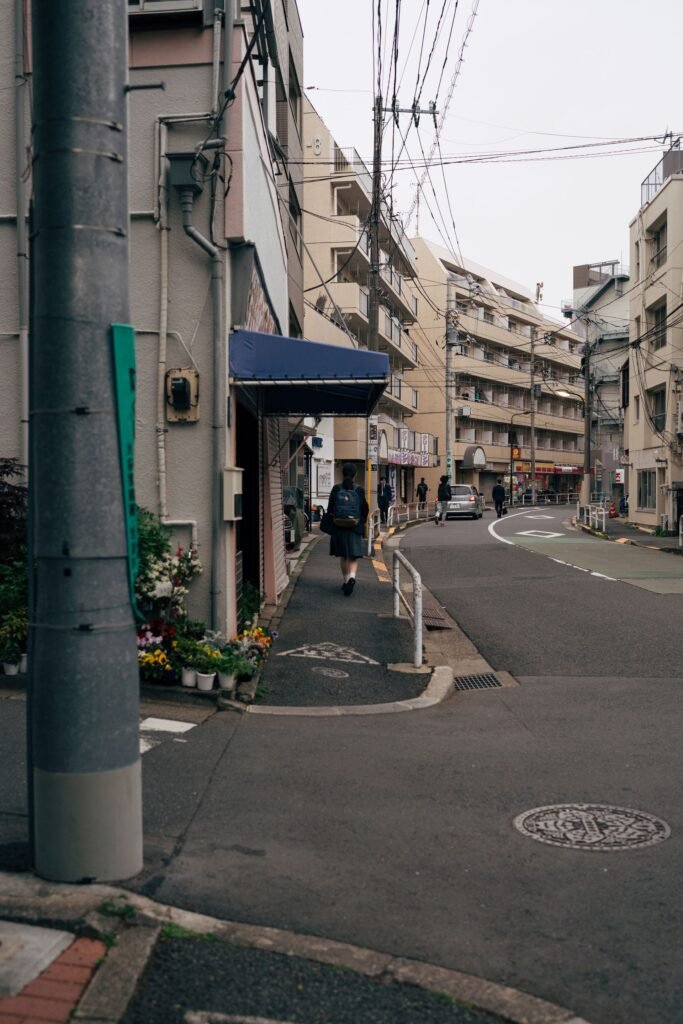
Photo via Pexels. Check the exit IP before you start: it should show Japan, and the city you asked for.
For a Japan proxy browser setup, add the proxy to the browser’s proxy settings or to a proxy extension, then open a Japanese site and confirm the local version loads. If the site still shows your home country’s version, check the site’s language and location settings, and try signed out in a clean profile, because a signed-in account adds its own history.
For proxy shopping, there is no setup. You create an account on the proxy service’s site, find the item, and pay. The service does the buying and the shipping. That is the whole difference between the two kinds of Japan proxy: one is a network setting, the other is a shopping service.
Other Country Proxies
Japan is one of more than 40 country guides on this site. Each guide covers that country’s free and paid proxy options in the same pattern as this page. The full set is below, grouped by region.
North America
- USA proxy: free and paid USA proxy options..
- Canada proxy: free and paid Canada proxy options..
- Mexico proxy: free and paid Mexico proxy options..
Europe
- UK proxy: free and paid UK proxy options..
- Germany proxy: free and paid Germany proxy options..
- France proxy: free and paid France proxy options..
- Spain proxy: free and paid Spain proxy options..
- Italy proxy: free and paid Italy proxy options..
- Netherlands proxy: free and paid Netherlands proxy options..
- Poland proxy: free and paid Poland proxy options..
- Ireland proxy: free and paid Ireland proxy options..
- Belgium proxy: free and paid Belgium proxy options..
- Switzerland proxy: free and paid Switzerland proxy options..
- Denmark proxy: free and paid Denmark proxy options..
- Norway proxy: free and paid Norway proxy options..
- Finland proxy: free and paid Finland proxy options..
- Portugal proxy: free and paid Portugal proxy options..
- Romania proxy: free and paid Romania proxy options..
- Ukraine proxy: free and paid Ukraine proxy options..
- Turkey proxy: free and paid Turkey proxy options..
- Russia proxy: free and paid Russia proxy options..
Asia and Oceania
- India proxy: free and paid India proxy options..
- China proxy: free and paid China proxy options..
- South Korea proxy: free and paid South Korea proxy options..
- Indonesia proxy: free and paid Indonesia proxy options..
- Vietnam proxy: free and paid Vietnam proxy options..
- Thailand proxy: free and paid Thailand proxy options..
- Philippines proxy: free and paid Philippines proxy options..
- Malaysia proxy: free and paid Malaysia proxy options..
- Singapore proxy: free and paid Singapore proxy options..
- Hong Kong proxy: free and paid Hong Kong proxy options..
- Taiwan proxy: free and paid Taiwan proxy options..
- Pakistan proxy: free and paid Pakistan proxy options..
- Australia proxy: free and paid Australia proxy options..
- New Zealand proxy: free and paid New Zealand proxy options..
Middle East, Africa and South America
- Israel proxy: free and paid Israel proxy options..
- Saudi Arabia proxy: free and paid Saudi Arabia proxy options..
- Iran proxy: free and paid Iran proxy options..
- South Africa proxy: free and paid South Africa proxy options..
- Brazil proxy: free and paid Brazil proxy options..
- Argentina proxy: free and paid Argentina proxy options..
- Venezuela proxy: free and paid Venezuela proxy options..
Note: a few keywords mapped to this article name countries with no country guide planned yet, such as Morocco, Kazakhstan, Jordan, Ethiopia, Egypt, Nigeria and Colombia. They are listed in the notes for a future map update.
Video: Buying from Japan from Overseas
This video walks through buying store-exclusive Japanese items from overseas, which is the proxy shopping workflow this guide describes.
Video: FudeFan on YouTube, “How to buy store-exclusive Japanese inks (and pens) from overseas”. The video is about buying pens and ink through proxy services, and it shows the workflow rather than one specific service. Checked live 23 November 2026.
Frequently Asked Questions
What is a Japan proxy?
A Japan proxy is either a network proxy with a Japanese IP address, or a shopping service that buys from Japanese stores on your behalf and ships the item to you.
What is the best Japan proxy service for shopping?
It depends on what you buy. For Mercari and Yahoo Auctions, Buyee at ¥500 per order is usually cheapest for several items, and Neokyo at ¥350 per item is cheapest for one item. For ordinary shops, ZenMarket at ¥300 to ¥500 per item is the predictable choice.
How much does a Japan proxy cost?
A proxy shopping service charges about ¥300 to ¥800 per item or per order, plus domestic and international shipping. A network proxy with Japanese IPs costs about $0.27 to $4.00 per GB for residential traffic, or from $0.27 per IP per month for Japanese ISP proxies.
Are there free Japan proxies?
Yes, but they are limited. Free proxy lists include Japanese entries, and Webshare’s free tier of 10 proxies includes Japanese IPs. Free list IPs are often already flagged and have low uptime, so they suit a one-off check, not professional work.
Can I buy from Mercari Japan from overseas?
Not directly. Mercari’s help pages describe overseas residents as customers who cannot use Mercari, and send them to linked cross-border companies. A proxy shopping service buys the item for you and ships it on.
Which proxy type is best for Japan?
Residential proxies are the best default for Japan, because they use real household IPs on NTT, SoftBank and KDDI networks. ISP proxies suit accounts, mobile proxies suit account creation, and datacenter IPs are only for bulk checks on unprotected sites.
What is the difference between a Japan proxy and a package forwarder?
A proxy service buys the item for you as well as shipping it. A forwarder such as Tenso only gives you a Japanese address: you place the order yourself, and it sends the parcel on. If the shop will not take your payment, you need a proxy service.
Do I need a Japan proxy to watch Japanese streaming?
A Japanese IP is what streaming platforms check, so a network proxy with a Japanese exit is the tool for that. A proxy shopping service does not give you a Japanese IP, so it will not help with streaming.
Sources
10
- Geonode. Japan Proxies: Japan Residential IPs from $0.27/GB. https://geonode.com/proxies-by-location/japan-proxy
- ProxyEmpire. Best Japan Proxies in 2026: 15 Providers Compared. https://proxyempire.io/best-japan-proxy-services/
- SaaS Ultra. 7 Best Japan Proxy Providers 2026. https://www.saasultra.com/best-japan-proxy-providers/
- Shonen Grail. Best Japan proxy service 2026: Buyee vs ZenMarket vs Neokyo. https://shonengrail.com/buy-from-japan/best-japan-proxy
- Japan Pocket Guide. How to Buy from Japan Online: Proxies and Shipping. https://japanpocketguide.com/shopping/buy-from-japan-online/
- Japan Trove. How to Buy from Japan: Buyee vs ZenMarket (Proxy Shopping Guide). https://japantrove.com/how-to-buy-from-japan/
- NihongoHub. How to Buy from Japan from Overseas: Proxy Services Compared. https://www.nihongo-hub.com/blog/buy-from-japan-proxy-services.html
- Torii Post. ZenMarket vs Buyee vs FROM JAPAN: Japan’s Top 5 Proxy Shopping Services, Compared Honestly (2026). https://toriipost.com/guides/japan-proxy-shopping-services-compared/
- MailMate. Best Japan Proxy Sites (2026): Fees, Shipping and Which to Use. https://mailmate.jp/blog/proxy-forwarding-japan
- CardRankJP. Buy Japanese Collectibles from Overseas. https://www.cardrankjp.com/en/buy-in-japan/online