Last updated: 23 November 2026. This hub is refreshed every two weeks with AI infrastructure news, cloud AI news and edge AI news, with dates and sources for every figure.
AI infrastructure news in November 2026 is a story of record demand meeting a cooler forecast. Cloud revenue grew at rates not seen in years, backlogs passed $1.8 trillion across the largest providers, and new AI services shipped weekly. In the same month, SemiAnalysis cut its five-year AI accelerator spending forecast by $608 billion. This page covers AI infrastructure and cloud news, edge AI, outages and financing, with every figure dated.
For the buildings and power behind this capacity, see our AI data center and energy news hub. For the chips inside the servers, see our AI chip news hub.

Cloud earnings: the AI infrastructure boom in numbers
The third quarter of 2026 was the strongest cloud quarter in years. Worldwide enterprise spending on cloud infrastructure services reached $168 billion in the quarter, up 55 percent year over year, according to Synergy Research Group data reported by CRN. AWS grew 39 percent to $46 billion, its fastest growth in nearly five years. Microsoft Azure grew 48 percent to $33.2 billion. Google Cloud grew 103 percent to $30.7 billion, more than doubling from $15.2 billion a year earlier, and now runs at a $123 billion annual rate.
Market share moved with the growth. AWS held 26 percent of the global market, down from 29 percent a year earlier. Microsoft Azure held 19 percent. Google Cloud won a record 16 percent, up from 13 percent. Oracle ranked fourth with 4 percent, up from 3 percent, and Alibaba Cloud held 4 percent. Both Anthropic and SpaceX entered Synergy’s top ten global cloud infrastructure companies for the first time, a sign that AI labs and their infrastructure arms are now counted alongside the established clouds.
Backlogs are even larger than quarterly revenue. Oracle reports $664 billion in remaining performance obligations, after more than $30 billion of new AI cloud contracts in a single quarter. AWS reports a $578 billion backlog, and Google Cloud reports $561 billion. Together the three pass $1.8 trillion of contracted future revenue. Oracle’s cloud infrastructure revenue rose 121 percent in its latest quarter, to $7.4 billion. The leading providers say customer demand for AI training and inference is still running ahead of the capacity they can build.
The forecast cut: SemiAnalysis trims $608 billion
The counterweight to the earnings story arrived on 13 November, when SemiAnalysis released a model update that cut its forecasts for AI accelerator shipments, capital expenditure, HBM demand and power demand. The 2030 global AI accelerator capital expenditure forecast fell from $1.531 trillion to $923 billion, a reduction of $608 billion. The 2027 forecast was cut from $770 billion to $627 billion, 2028 from $1.054 trillion to $758 billion, and 2029 from $1.352 trillion to $796 billion. The 2026 forecast was basically unchanged at around $392 billion.
Nvidia was hit hardest in the revision. SemiAnalysis cut Nvidia’s shipment forecasts by the largest margin and lowered its average selling price assumptions for next-generation products, on the view that intensifying competition will force lower margins. Cumulative accelerator logic wafer shipment area from 2026 to 2030 was cut by 17 percent, with Nvidia accounting for 66 percent of that reduction. The forecast still has accelerator spending growing, from $392 billion in 2026 to $923 billion in 2030, but the growth path is now clearly lower than the previous model assumed.
The two stories can both be true. Demand today exceeds supply, which is why revenue and backlogs are at records. The forecast cut is about the outer years, where SemiAnalysis now expects slower growth in accelerator spending than it did before. Readers should treat the cut as a forecast, not a result, and watch whether hyperscaler guidance follows it.
Oracle, AWS and Google Cloud: funding the buildout
Oracle is the most leveraged bet on AI infrastructure. Oracle plans to raise $20 billion through bond and share sales to fund AI and cloud expansion, according to a filing and reports from Reuters and Bloomberg dated 2 November 2026. Oracle reported approximately $125.34 billion in borrowings as of 31 August and has said it expects capital spending to peak in the current fiscal year and the next. The company targets more than $225 billion in revenue by fiscal 2030 and has committed to a substantial build-out of AI data center capacity, including its work with OpenAI on the Stargate project. Oracle also expanded its multicloud database offerings across AWS, Microsoft Azure and Google Cloud, with a focus on regulated government workloads.
AWS kept shipping AI services through November. On 20 November, AWS launched the SageMaker HyperPod Global Inference Gateway, giving customers one managed endpoint for AI inference across clusters and regions. On 18 November, AWS announced that Lambda functions can now run on GPU instances, bringing serverless AI inference to vLLM, SGLang and PyTorch. AWS Interconnect for multicloud reached general availability with Azure, so AWS now links privately to Azure, Google Cloud and Oracle Cloud through one service. AWS Nitro Sandboxes, announced in the 16 November weekly roundup, give EKS pods and ECS tasks their own virtual machine boundary on shared EC2 hosts, at no extra charge.
Google Cloud extended its Cross-Cloud Interconnect to Microsoft Azure in preview on 18 November, offering a private encrypted link provisioned in minutes across three regions. The multicloud links matter because customers increasingly run workloads on more than one cloud, and private links between clouds used to take weeks to arrange.
Microsoft’s cloud news in November was about custom silicon as well as services. Azure Cobalt 200 virtual machines reached general availability on 17 November, putting Arm at the center of Microsoft’s cloud. Microsoft became the first announced Intel EMIB customer for its Azure custom silicon, locking in multi-year Xeon capacity that includes next-generation Diamond Rapids processors.
Edge AI news: inference moves to the device
Edge AI news in November 2026 shows inference moving out of the data center and onto devices. The pattern is the same across vendors: run the model where the data is, when the task is small enough and the answer is needed fast. On-device AI keeps data local, cuts latency, and keeps working when the network does not.
The clearest consumer signal is in laptops. RTX Spark laptops have been available since 16 October from ASUS, Dell, HP, Lenovo, Microsoft and MSI, starting at $2,599, and let laptops run large AI models locally. Intel’s Core Ultra Series 3, known as Panther Lake, the AMD Ryzen AI 400 series and the Qualcomm Snapdragon X2 Elite all bring AI acceleration to laptops. In phones, the Qualcomm Snapdragon 8 Elite Gen 6 carries the same idea into handsets.
Edge AI cameras, robotics and manufacturing are the industrial side of the same story. Edge AI camera news, edge AI robotics news and edge AI manufacturing news all point to the same shift: vision, inspection and control tasks that used to need a round trip to the cloud now run on the device. Computer vision at the edge is a named growth area in the keyword map for this hub, and the November news supports it, with new camera and robotics deployments reported through the month.
Embedded AI is the quietest part of the edge story and one of the largest. Embedded AI news covers models built into appliances, vehicles, medical devices and factory equipment, where the user never sees a chatbot at all. The model is a feature of the product, not a destination.

Outages: eight major incidents in six days
November also showed the fragility of concentrated infrastructure. Eight major outages hit Microsoft 365, AWS, Workday, the Federal Aviation Administration, JPMorgan Chase, United, the National Security Agency and Apple between 12 and 17 November, with no evidence of a coordinated attack, according to a 23 November roundup. The cluster is a reminder that AI infrastructure and cloud news is not only about growth: when so much capacity sits with so few providers, a bad week touches almost everyone.
The outage cluster sits alongside a busy week for open source infrastructure. Istio 1.32 went generally available, Prometheus 3.16 shipped, and Grafana patched six CVEs across five versions in the same week. None of these is an AI story on its own, but all three are part of the plumbing that AI services run on.
Financing and sovereign AI infrastructure
Financing is the second constraint after power. SpaceX debt tied to AI chips was set to reach the market in the week of 19 November. HUMAIN closed a $667 million debt deal, a first for Saudi AI infrastructure. ChronoScale’s Odessa data center secured a $7.5 billion AI contract, though the counterparty and term were not stated in the source report. Microsoft is raising $25 billion through a bond sale as AI infrastructure costs rise, days after offering voluntary buyouts to nearly 60,000 employees, with the company expecting up to 3,000 employees to accept.
Sovereign AI infrastructure is now a named category. Nvidia, Rebellions and SK Telecom teamed up on sovereign AI infrastructure in Korea, built around Nvidia’s NVLink Fusion, which brings third-party accelerators into Nvidia’s ecosystem. SK Telecom plans a gigawatt-scale AI factory in Korea built on Nvidia’s DSX AI Factory architecture, with an operational target of 2027, starting on Blackwell and moving to the Vera Rubin platforms. Rebellions’ ATOM-Max NPUs were already handling approximately 14 million requests and more than 4 billion tokens every day as of September 2026. The plan’s move from Blackwell to Vera Rubin ties SK Telecom’s schedule to Nvidia’s product cadence, and the more than $500 billion figure discussed around the wider SK relationship is a potential commitment, not a signed check.
Nvidia began shipping the Vera Rubin NVL72, a system with 72 GPUs and 36 CPUs. OpenAI will rent AMD Cloud capacity, AMD closed its Taalas deal for AI inference chips, and the buyers’ message is consistent: test non-Nvidia options, keep more than one supplier, and do not let a single vendor set the timetable.
Power and cooling: the hidden cloud cost
Every cloud AI service has a power bill behind it, and in November 2026 that bill became a selling point. Anthropic’s $3.4 billion commitment for 1.7 gigawatts of gas generators, covered in full on our AI data center and energy news hub, is the clearest example: a lab buying its own power because the grid cannot deliver it fast enough. Cloud buyers now ask providers where the power comes from and how much headroom a region has, not just what the instance costs per hour.
Cooling is the other hidden cost. CoolIT and Ecolab launched a 3 megawatt coolant distribution unit in November, and Vertiv unveiled a new 800 volt direct current portfolio for AI data halls. Liquid cooling and higher-voltage power delivery decide how much of a site’s electricity reaches the chips. For cloud customers, the practical effect is regional: capacity appears first where power and cooling are already solved, and waits where they are not.

What the cloud diagram means
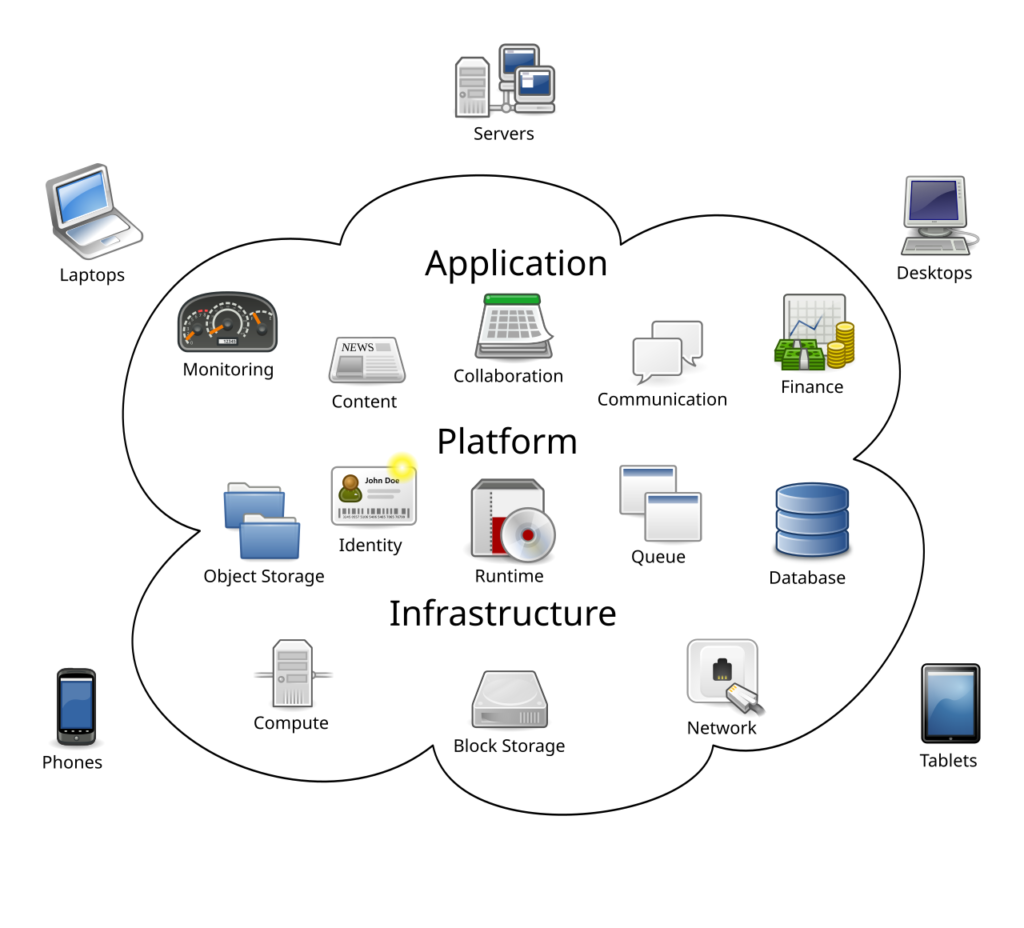
Cloud AI infrastructure has three layers, and the November news touched all three. At the bottom is physical capacity: data centers, power, chips and networking. In the middle is the platform layer: managed training, inference endpoints, serverless GPUs and multicloud links. At the top is the application layer: agents, copilots and embedded AI. The record revenue sits at the top two layers, the power constraint sits at the bottom, and the SemiAnalysis cut is a warning that the bottom layer may not grow as fast as the top layers need.
What to watch next
Four things decide the next round of AI infrastructure news. First, whether hyperscaler guidance in the next earnings season follows the SemiAnalysis cut or holds at the $730 billion 2026 total. Second, Oracle’s $20 billion raise, which tests whether debt markets will fund the most leveraged AI buildout. Third, the Vera Rubin ramp and the AMD capacity OpenAI is renting, which test whether buyers can diversify away from a single supplier. Fourth, the outage cluster of 12 to 17 November, and whether providers publish root causes that change how customers design for failure.
This hub updates every two weeks. Cloud revenue figures are quarterly and change only at earnings; service launches, outages and financing deals change weekly and are re-checked at each refresh.
Frequently asked questions
What is AI infrastructure news?
AI infrastructure news covers the hardware, data centers, cloud platforms and networking that AI models run on. It includes cloud earnings, chip supply, data center power, edge AI, outages and the financing behind the buildout.
How big is the cloud market in 2026?
Worldwide enterprise spending on cloud infrastructure services reached $168 billion in the third quarter of 2026, up 55 percent year over year, according to Synergy Research Group. The global cloud computing market is valued at $1,106.28 billion in 2026 in a Precedence Research release dated 18 November 2026.
Who leads the cloud market?
AWS leads with 26 percent share, followed by Microsoft Azure at 19 percent and Google Cloud at a record 16 percent in the third quarter of 2026. Oracle and Alibaba Cloud each hold 4 percent.
What did SemiAnalysis cut in November 2026?
SemiAnalysis cut its 2030 global AI accelerator capital expenditure forecast from $1.531 trillion to $923 billion, a reduction of $608 billion, in a model update released 13 November 2026. Nvidia’s shipment forecasts were cut by the largest margin.
What is edge AI?
Edge AI runs AI models on the device where the data is created, such as a phone, laptop, camera or robot, instead of sending the data to a data center. It cuts latency, keeps data local and works when the network does not.
What is on-prem AI news?
On-prem AI news covers AI systems run in a company’s own data center rather than in a public cloud. It matters for regulated industries and for workloads where data cannot leave the building.
Did AWS, Azure or Google Cloud have outages in November 2026?
Eight major outages hit Microsoft 365, AWS, Workday, the FAA, JPMorgan Chase, United, the NSA and Apple between 12 and 17 November 2026, with no evidence of a coordinated attack.
What is Oracle’s AI infrastructure bet?
Oracle plans to raise $20 billion through bond and share sales to fund AI and cloud expansion, carries about $125.34 billion in borrowings, targets more than $225 billion in revenue by fiscal 2030, and reports $664 billion in remaining performance obligations.
Sources
8
- Cloud Market Share Q3: Google Cloud Gains As AWS Loses Ground: https://www.crn.com/news/cloud/2026/cloud-market-share-q3-google-cloud-gains-as-aws-loses-ground-anthropic-and-spacex-crack-into-top-10
- Cloud Computing Market to Reach USD 5,946.84 Billion by 2035: https://www.globenewswire.com/news-release/2026/11/18/3405919/0/en/cloud-computing-market-to-reach-usd-5-946-84-billion-by-2035-as-ai-workloads-drive-record-growth-and-backlogs-at-aws-microsoft-google-and-oracle.html
- Cloud Computing Watch: Oracle’s Financing, AI Data Center, Hyperscaler Race: https://www.thecodew.com/2026/11/cloud-computing-watch-november-3.html
- AI Infrastructure Investment Cools Down, Nvidia Hit Hardest: https://temp.htx.co.si/news/ai-infrastructure-cools-down-nvidia-takes-the-hardest-hit-se-Ea1soq3B0
- Latest AI Infrastructure News: November 19, 2026: https://slicast.com/brief/2026-11-19
- Nvidia, Rebellions and SK Telecom team up on sovereign AI infrastructure: https://www.tradingview.com/news/cryptobriefing:cfdc520e3094b:0-nvidia-rebellions-and-sk-telecom-team-up-on-sovereign-ai-infrastructure/
- Cloud news roundup, November 2026: https://www.newscast.tech/category/cloud
- The State of AI Data Center Supply Chains, November 2026: https://medium.com/@hmenon_43970/the-state-of-ai-data-center-supply-chains-5aa74a3d399c
Every factual claim on this page was verified against a named source above. Figures are dated as stated; re-check them at the next refresh, because cloud revenue moves at earnings and forecasts move with each model update.