

Yes. Using a VPN is legal in the UK for adults and for children. No UK law bans buying, installing, or using a VPN, and the Online Safety Act 2023 does not change that.
This page is general information about UK law as of 23 November 2026, not legal advice. Laws and government policy in this area change quickly, so check the current position before relying on anything here.
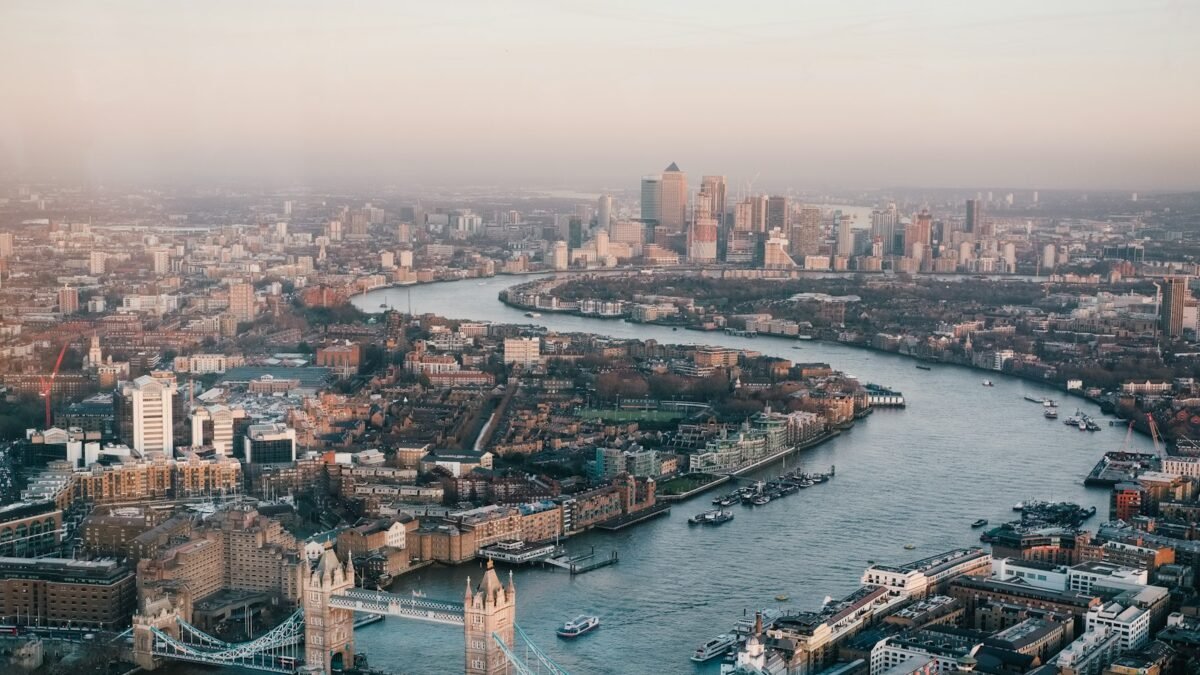
Photo via Unsplash. London, where Parliament and Ofcom set the rules discussed on this page.
What UK Law Says About VPNs
There is no UK law against owning or using a VPN. Millions of people and businesses use them every day, from remote workers connecting to company systems to travellers on hotel Wi-Fi. The UK’s National Cyber Security Centre publishes guidance on using VPNs securely, and VPNs are standard in business.
A VPN does not change what is legal. Anything unlawful without a VPN is still unlawful with one. A VPN is a tool, and the law judges what you do with it, not the tool itself.
That distinction explains the whole UK position. The government regulates what services must do to protect children, and it regulates what people must not do online, but it has not regulated the VPN itself. As of November 2026, no law in force restricts VPN use, and no enforcement action has been taken against a VPN provider or a VPN user for the act of using a VPN.
For the wider picture across countries, see our guide to whether VPNs are legal.
The Online Safety Act and Age Checks
The confusion about a possible UK VPN ban comes from the Online Safety Act 2023. The Act regulates the companies that run websites and apps, not the people who use them.
Under the Act, services that host pornography or other content harmful to children must stop UK children from reaching it. Since 25 July 2025, that has meant highly effective age checks, such as photo ID, facial age estimation, or a bank or card check. Ofcom enforces these duties and can fine a company up to 18 million pounds or 10 percent of its global revenue, whichever is greater.
The Act applies to services even if the companies providing them are outside the UK, so a site based abroad may still check visitors from the UK. It does not mention VPNs at all.
Ofcom’s own reporting shows the scale of the change. In the first month of the new age check rules, visits to pornography sites in the UK fell by a third, and daily active users of VPN apps in the UK temporarily doubled to around 1.5 million. All of the UK’s top 10 porn sites, and the majority of the top 100, now have age checks in place. Ofcom also reported that the proportion of children being asked to prove their age who encountered highly effective age checks rose from 25 percent to 43 percent between July 2025 and January 2026.
None of that makes VPN use unlawful for an adult. It may still breach a site’s terms of service, and a platform that detects a VPN can restrict the account. That is a contract matter between the user and the service, not a criminal matter.

Photo via Unsplash. Parliament voted on VPN restrictions in March 2026 and rejected them.
The 2026 Parliament Vote
The closest the UK has come to restricting VPNs was a vote in Parliament in early 2026. In January 2026, the House of Lords voted, by 207 to 159, for an amendment that would have required the government to prohibit VPN services for under-18s. The amendment was attached to the Children’s Wellbeing and Schools Bill.
The House of Commons disagreed. On 9 March 2026, MPs rejected Lords Amendment 37 by 321 votes to 106. The amendment would have written restrictions on social media, VPNs, and phones directly into the Bill.
The Bill then went back and forth between the two Houses through April and received Royal Assent on 29 April 2026. The Act that followed, the Children’s Wellbeing and Schools Act 2026, contains no rule on VPNs. As enacted, it does not contain the words “VPN” or “virtual private network” at all.
What the Act did add, in section 70, is a new section 214A to the Online Safety Act 2023. That section lets the Secretary of State make regulations requiring providers of specified internet services to prevent or restrict children’s access to specified services or features. Which services, and what ages, is left to future regulations. No regulations under that section have restricted VPNs, and the power is a general one, not a VPN ban.

Photo via Unsplash. The Children’s Wellbeing and Schools Act 2026 received Royal Assent on 29 April 2026.
What the Government Said in July 2026
After the Parliament vote, the government consulted on children’s online safety. The consultation was called “Growing up in the online world” and ran from March to May 2026. It asked directly whether children’s access to VPNs should be restricted, and it received more than 116,000 responses.
The government’s response, published in July 2026, is the clearest statement of its position. It wrote: “We will not ban or age-gate VPNs.” The full passage adds: “However, we must ensure that these tools are not misused to undermine child safety protections and we will keep this area under close review. We are prepared to take further action on this, should evidence show that circumvention is not being tackled adequately.”
Instead of restricting VPNs, the government chose to act through social media companies. Its response committed to “an onus on social media companies to detect and prevent VPN use among under-16s to access their services”. It asked Ofcom to research how services can detect and reduce circumvention, called on VPN providers to make their products less accessible to children, and promised guidance for parents on how circumvention tools work.
That is the position as of November 2026: no ban, no age checks for VPNs, and the duty placed on platforms rather than on VPN providers or users. The words “under close review” mean the position can change, and the government has said it is prepared to act again if circumvention is not tackled.
Using a VPN to Get Around Age Checks
Adults can, and many did after July 2025, use a VPN to appear outside the UK. The Act places duties on the sites, not on users, and the government’s July 2026 response did not announce any restriction on adult VPN use.
That does not make it risk free. A site that detects a VPN can refuse to serve the visitor, suspend the account, or block the VPN server’s IP address. Streaming services do this routinely. The BBC, for example, states on its help pages that a programme cannot be played if it detects that a viewer might be using a VPN or proxy, and that programmes cannot be streamed outside the UK, even on holiday.
For under-18s, the position is different in practice even if the law is the same. Age checks exist to protect children, and a child who uses a VPN to reach adult content is bypassing a protection put there for their safety. Parents who want to manage this should look at device level controls, router settings, and the age settings in their children’s accounts, rather than relying on a site’s checks alone. The government has promised practical guidance for parents on how VPNs and other circumvention tools work at a household level.
VPNs at Work, School, and While Travelling
A VPN is legal, but that does not mean every use of one is allowed everywhere. Your employer, school, or university can set its own rules for its own network, and using a personal VPN to get around those controls may breach your contract, acceptable use policy, or school rules, even though it is not illegal.
The same applies to public Wi-Fi. A cafe or hotel can block VPN traffic on its network, and there is nothing unlawful about that. It is their network, and they can set the terms of its use.
When travelling abroad, the rules change with the country. VPNs are legal in the US, Canada, the EU, Australia, and Japan, and in most of Latin America, Asia, and Africa. A small number of countries restrict or ban them, including China, Russia, Iran, Turkmenistan, and Belarus, and some others require government approval. Check the local rules before you travel, and do not assume that what is legal in the UK is legal everywhere.
Our guide to whether VPNs are legal in the USA covers the closest comparison, and our guide to whether VPNs are legal in China covers the strictest one.

Photo via Unsplash. The Online Safety Act 2023, not a VPN law, is the source of the UK’s age checks.
Is There a UK VPN Ban?
There is no UK VPN ban, and none has been proposed for adults. The March 2026 vote rejected the amendment that came closest to restricting VPNs. The July 2026 government response chose to act through social media companies, not VPN providers.
Three official records point the same way. The Lords amendment that would have restricted VPNs for under-18s did not become law. The Children’s Wellbeing and Schools Act 2026, as enacted, does not contain the words “VPN” or “virtual private network”. And the government’s July 2026 response says plainly: “We will not ban or age-gate VPNs.”
That does not mean the debate is over. The Children’s Commissioner for England has called VPNs a loophole that needs closing, and the government has said it will keep the area under close review. A future government could return to the question, and the new section 214A power gives ministers a route to restrict children’s access to specified services by regulation. For now, though, the law is clear.
What About Australia, Brazil, and Canada?
The UK is not the only country dealing with age checks and VPNs, and the pattern elsewhere is the same: the duties fall on platforms, not on VPN users.
Australia’s under-16 social media ban took effect on 10 December 2025. Platforms must take reasonable steps to stop under-16s holding accounts, and they face fines of up to A$109.2 million if they do not comply. No Australian law bans buying, installing, or using a VPN, and the amending Act does not mention VPNs. Early data from the regulator, eSafety, found that listing a false age was the most common way children kept accounts, and using a VPN was much less common.
Brazil’s rules, in force since March 2026, require under-16 accounts to be linked to a parent or guardian, and self-declared age checks are no longer allowed. That is a parental linking rule, not a VPN ban. Canada has no VPN ban. Some provinces and the federal government are considering age limits for social media, but no VPN restriction is in force.
Myanmar is a different case. The country has restricted internet access and VPN use as part of wider controls on online access, and travellers should check the current position before relying on a VPN there. It is not comparable to the UK, Australia, or Canada, where VPNs remain legal tools.

Photo via Unsplash. VPN rules differ sharply by country, so check local law before travelling.
Choosing a VPN in the UK
Since VPNs are legal in the UK, the question is which one to choose, not whether you can use one. The qualities that matter are the same as anywhere else: a clear no-logs policy, modern encryption, a kill switch that stops traffic if the connection drops, and servers in the UK and in the countries you connect to.
Price is a secondary question. Paid VPN subscriptions typically cost between $2 and $15 per month, with the price falling on longer subscriptions, according to Surfshark’s pricing guide checked in 2026. Free VPNs often pay for themselves by logging data or showing ads, so a paid service from a provider with a published audit is usually the safer choice.
If you want a shortlist for the UK specifically, our guide to the best VPN for UK covers free and paid options. For the safety question that sits behind the choice, see our guide to whether a VPN is safe.
Frequently Asked Questions
Is using a VPN legal in the UK?
Yes. No UK law stops adults or children from buying, installing, or using a VPN. The Online Safety Act 2023 does not mention VPNs, and the government’s July 2026 response says: “We will not ban or age-gate VPNs.”
Is there a VPN ban in the UK?
No. There is no ban, and none has been proposed for adults. In March 2026, Parliament rejected an amendment that would have restricted VPNs, by 321 votes to 106 in the Commons.
Did the UK ban VPNs for under-18s?
No. The House of Lords voted in January 2026 to bar VPN services for under-18s, by 207 votes to 159, but the Commons disagreed, and the Act that passed in April 2026 contains no VPN ban.
Can I use a VPN to get around UK age verification?
Adults can, and many did after July 2025. The Online Safety Act places duties on the sites, not on users. It may breach a site’s terms of service, and the site can restrict or suspend the account.
What is the Online Safety Act?
The Online Safety Act 2023 is the UK law that requires online services to protect children from harmful content. Since 25 July 2025, services that host pornography or other harmful content must use highly effective age checks for UK users. Ofcom enforces the Act.
Will VPNs be banned in the UK in future?
Nothing currently before Parliament would ban them. The government has said it will keep the area under close review and is prepared to act if circumvention is not tackled. A new power in section 214A of the Online Safety Act lets ministers restrict children’s access to specified services by regulation.
Is a VPN legal in Australia?
Yes. Australia’s under-16 social media ban, in force since 10 December 2025, puts duties on platforms. No Australian law bans VPNs, and the amending Act does not mention them.
Is a VPN legal in Canada?
Yes. Canada has no VPN ban. Some provinces and the federal government are considering age limits for social media, but no VPN restriction is in force.
Is a VPN legal in Brazil?
Yes. Brazil’s rules, in force since March 2026, require under-16 accounts to be linked to a parent or guardian. That is a parental linking rule, not a VPN ban.
Is a VPN legal in Myanmar?
Myanmar has restricted internet access and VPN use as part of wider controls. Travellers should check the current position before relying on a VPN there, as the rules are stricter than in the UK.
Sources
10
- GOV.UK, “Growing up in the online world: government response, July 2026”: https://www.gov.uk/government/consultations/growing-up-in-the-online-world-a-national-consultation/outcome/growing-up-in-the-online-world-government-response-july-2026
- Ofcom, “Age checks helping make online experiences safer for UK children”: https://www.ofcom.org.uk/online-safety/protecting-children/age-checks-helping-make-online-experiences-safer-for-uk-children-but-job-not-done-and-tech-industry-must-act-to-strengthen-protections
- Ofcom, “Letter from Dame Melanie Dawes on the Online Safety Act, driving change in 2025”: https://www.ofcom.org.uk/siteassets/resources/documents/about-ofcom/public-correspondence/2025/letter-from-dame-melanie-dawes-on-the-online-safety-act-driving-change-in-2025.pdf?v=406250
- VPNClue, “Is a VPN Legal in the UK? Online Safety Act and Age Checks”: https://vpnclue.com/laws/uk/
- Mister O VPN, “Is a VPN Legal in the UK? What Parliament Decided in 2026”: https://misterovpn.com/blog/vpn-in-uk
- Gizmodo, “Are VPNs Legal? VPN Laws by Country Explained for 2026”: https://gizmodo.com/best-vpn/are-vpns-legal
- Gizmodo, “Bypass UK Age Verification in 2026: A VPN Guide for Adults”: https://gizmodo.com/best-vpn/bypass-age-verification-uk
- VPNClue, “Australia Age Verification and VPNs: Is a VPN Legal?”: https://vpnclue.com/laws/australia/
- Reuters, “From Australia to Europe, countries move to curb children’s social media access”: https://www.reuters.com/legal/government/australia-europe-countries-move-curb-childrens-social-media-access-2026-04-24/
- Surfshark, “VPN benefits: pros and cons you should know”: https://surfshark.com/blog/benefits-of-vpn
Every factual claim on this page was verified against a named source above, as of 23 November 2026.


