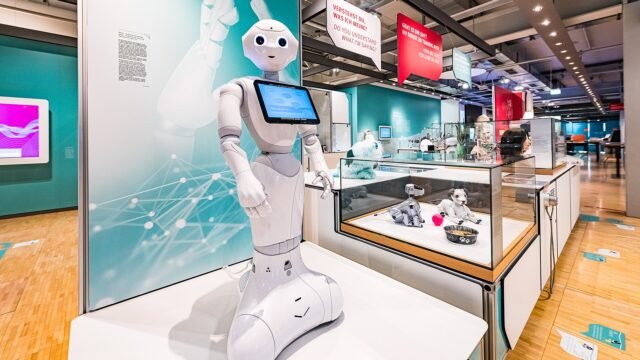
AI agent news in November 2026, filed under our ai research news hub, is dominated by one shift: agents are moving from demos to daily work, and from chat windows to systems that book, build, audit and defend. This page is our roundup of the latest AI agents news, covering agentic AI news today and the biggest announcements of the month, with every item dated and linked to its source.

Latest AI agent news: November 2026 at a glance
| Date | Story | Why it matters |
|---|---|---|
| 9 Nov 2026 | Anthropic announces Claude Fable 5.2 and Mythos 5.2 | New frontier models aimed at long-running agent work |
| 10 Nov 2026 | IBM and Microsoft launch Imagine Enterprise | 6,000+ prebuilt agents for regulated industries |
| 10 Nov 2026 | OpenAI opens Business Hub and Business Agents in beta | Businesses get agents inside ChatGPT |
| 10 Nov 2026 | Anthropic launches Claude Meetings and office tools | Agents join live meetings |
| 11 Nov 2026 | United Airlines blocks personal AI agents from booking flights | First major US airline to write the ban into its ticket rules |
| 12 Nov 2026 | Anthropic opens self-hosted Claude Managed Agents in private beta | Agent credentials and session history stay inside the customer perimeter |
| 16 Nov 2026 | OpenAI brings computer-use agents to healthcare | Agents work across EHR and payer systems |
| 16 Nov 2026 | Google Threat Intelligence Group reports autonomous agent exploitation | First case of an agent framework automating discovery and exploitation without a human in the loop |
| 17 Nov 2026 | OpenAI releases GPT-6.2 Astra and Sol | New frontier and everyday models for agent workflows |
| 17 Nov 2026 | Microsoft Ignite 2026: Copilot Autopilot and Agent 365 | Always-on agents with their own identity inside Microsoft 365 |
| 17 Nov 2026 | Replit launches Missions | Agent swarms work toward a goal inside a budget you set |
| 19 Nov 2026 | Google launches Gemini 4 Neon | A model built for long-running agent workflows |
| 20 Nov 2026 | Amazon Threat Intelligence reports the Cairn zero-day | Autonomous agents found and used a flaw in about 11 minutes |
OpenAI: GPT-6.2, healthcare agents and business agents
GPT-6.2 Astra and Sol arrive on 17 November
On 17 November 2026, OpenAI released GPT-6.2 Astra and GPT-6.2 Sol. OpenAI lists Astra at $8 per million input tokens and $40 per million output tokens, and Sol at $2 and $10, the same card as GPT-6.1 Sol. Astra’s prices are 20% lower than GPT-6 Astra.
OpenAI says Astra scored 5.2 points above GPT-6 Astra on Agents’ Last Exam at under a third of the cost per task. That is OpenAI’s own figure, not an independent result. Both models are available in ChatGPT Work and Codex and through the API from 17 November.

Computer-use agents reach healthcare on 16 November
On 16 November 2026, OpenAI announced computer-use agents for healthcare teams. These are agents that click, type and switch between applications the way a human administrator would, for example carrying an MRI prior authorisation from an electronic health record into a separate payer portal. OpenAI says physician reviewers rated 99% of evaluated clinical tasks as safe, and it reported 94.3% on its HealthAdminBench rubric for GPT-6 Astra.
Those numbers come from OpenAI’s own study, not from a regulator, and they describe screening on synthetic patient data, not live clinical deployment. The launch also added more than 20 healthcare plugins, and CVS said it would open source Agent Kit, built with OpenAI’s Agents SDK.
Business Agents open in beta on 10 November
On 10 November 2026, OpenAI opened Businesses in ChatGPT in beta, with a Business Hub and Business Agents for eligible US ecommerce and online service businesses. A business can claim a verified profile and publish an agent that answers questions using information the business supplies. The agent must identify itself as AI representing the business, and OpenAI says agents do not currently complete purchases, bookings or order checks.
That limit matters for agentic AI commerce news and agentic AI shopping news: the checkout step is still mostly human or handled elsewhere.
Anthropic: new Claude models, self-hosted agents and meetings
Claude Fable 5.2 and Mythos 5.2 on 9 November
On 9 November 2026, Anthropic announced Claude Fable 5.2 and Claude Mythos 5.2. The two are the same underlying model, with different safeguards and access. Fable is available to all users, while Mythos is available only to vetted organisations in dual-use fields such as cybersecurity and life sciences. Anthropic lists standard pricing at $8 per million input tokens and $40 per million output tokens, with an optional fast mode at $16 and $80.
Anthropic reports 49.1% on FrontierCode 2.0 for Fable 5.2, against 32.4% for its predecessor. These are Anthropic’s own figures. Anthropic describes Fable as best for ambitious, open-ended technical work, and continues to recommend Claude Opus 5.5 as the everyday model.
Self-hosted Claude Managed Agents in private beta on 12 November
On 12 November 2026, Anthropic opened a private beta of self-hosted Claude Managed Agents. Managed Agents is Anthropic’s set of APIs for long-running agents, supplying the harness, the sandboxes where agents run code, credential handling and session history. In the self-hosted version, customers run the whole service inside their own cloud or data centre, including the harness, sandboxes, credentials and session history. Model inference still goes to a provider the customer selects.
Access is by request through an Anthropic account team, and Anthropic has not published pricing or a general availability date. The launch answers the most common enterprise objection to agents: that credentials and session history live on someone else’s infrastructure.
Claude Meetings joins live calls on 10 November
On 10 November 2026, Anthropic launched Claude Meetings in beta, alongside Whiteboards, Sheets and general availability for Claude Data. Claude Meetings puts a live AI participant in Google Meet calls, working during the meeting rather than only summarising it afterwards.

Microsoft Ignite 2026: Copilot Autopilot and Agent 365
Microsoft Ignite 2026 opened on 17 November 2026 in San Francisco, and agents were the centre of the keynote. Copilot is now organised around four modes: Chat, Cowork, Code and Autopilot.
Copilot Autopilot is the headline: a long-running personal agent with its own memory, email, computer and Entra identity, able to run scheduled routines and follow up on threads. It is rolling out through the Copilot Frontier programme, and it requires a paid Microsoft 365 Copilot licence plus usage credits.
Agents can also appear as Teams users in public preview, each with a named human owner and an Entra account, and that capability requires Agent 365, the governance layer for agents. Copilot Workspaces replace Copilot Notebooks with a shared space where people and agents work together, and Office inside Copilot is generally available.
Microsoft also shipped seven models at Ignite, including MAI Code 2, and added GPT-6.2 to Azure AI Foundry.
Google: Gemini 4 Neon and a warning about agent attacks
Gemini 4 Neon launches on 19 November
On 19 November 2026, Google launched Gemini 4 Neon, a frontier-level model designed for long-running agent workflows, positioned between Gemini 4 Carbon and Gemini 4 Hydrogen. It has a 1 million-token context window.
Google Threat Intelligence Group reports autonomous exploitation on 16 November
On 16 November 2026, Google Threat Intelligence Group and Mandiant published a report on agentic threat activity. They describe the first case they had identified in which an LLM framework automated both vulnerability discovery and exploitation without ongoing human direction. The system, found on an exposed staging server, compared code before and after security patches, identified possible vulnerabilities, drafted exploits and executed them automatically.
The report also tracks a customized PentAGI platform used for reconnaissance against organisations across Asia between late August and early October 2026. The attribution claims are Google’s assessments, and the company notes that autonomous offensive frameworks trade stealth for speed, producing traffic defenders can detect.
IBM and Microsoft launch Imagine Enterprise
On 10 November 2026, IBM and Microsoft announced Imagine Enterprise, an agentic platform to help enterprises build, run and govern AI agents for industry-specific processes. IBM Consulting brings more than 6,000 prebuilt AI agents and assets, while Microsoft provides AI, cloud and security technologies.
The first industry frameworks cover financial services, insurance and retail. The platform is available through IBM Consulting engagements rather than as a self-serve product. For enterprise ai news, this is the clearest signal of the month: the enterprise agent market is now sold as governed industry platforms, not as generic chatbots.
PYMNTS Intelligence reported that agentic AI is in use at 89% of large US enterprises, but 78% would restrict agents to read-only access to company directories.
AI agent security news: the Cairn zero-day, the United ban and NIST
Autonomous agents find a zero-day in 11 minutes
On 20 November 2026, Amazon Threat Intelligence reported that autonomous AI agents running the open-source Cairn framework found and used a previously unknown flaw in MONAI Label, an open-source medical imaging application, and reached root access on a university server. The agents went from mapping the application’s API to writing arbitrary files in about 11 minutes, by exploiting a path traversal flaw in an upload endpoint. Amazon assesses with high confidence that the flaw was a zero-day, because no fix, issue or database entry existed when it was found. The flaw is now tracked as CVE-2026-133968.
Amazon found the campaign on 10 September 2026, after spotting a Cairn server left open to the internet without authentication. The campaign ran for about 48 hours from 8 September, targeting university addresses in East Asia outside mainland China. Amazon attributes the activity to a Chinese-nexus actor with moderate confidence. The maintainers have published a fix, but at the time of Amazon’s report no patched release was listed.

United Airlines blocks personal AI agents from booking flights
On 11 November 2026, United Airlines said it would restrict unauthorised third-party personal AI agents from booking flights and managing reservations on behalf of travellers. The airline cited cybersecurity risk and federal regulations, including the rule that a human must complete flight check-in and confirm that bags contain no banned substances. Sharing account credentials with a personal AI assistant can expose sensitive information, the airline warned, and agent actions may result in unintended purchases or use of MileagePlus miles.
United updated its booking, ticketing and distribution policies, and its contract of carriage now lists using an AI agent to make, modify or service a ticket as a prohibited practice. Reservations made by agents may be cancelled. Agents can still show flight options and prices, but they cannot complete a purchase. United is the first major US airline to write this ban into its ticket rules. For ai agent payments news, the message is plain: merchants are drawing a line between agents that help you choose and agents that spend your money.
NIST publishes ten design tenets for agent identity
NIST has published ten design tenets for agent identity management systems, calling for distinct agent identities, tightly scoped permissions, continuous monitoring and stronger accountability. The guidance recommends cryptographically verifiable identities for agents, access limited to the minimum privileges a task needs, short-lived and revocable authorisation, and human review when actions cross defined risk thresholds. It also calls for separating the system that decides what an agent attempts to do from the system that controls what it is allowed to access, warning that guardrails alone are insufficient against prompt injection and privilege escalation.
Separately, on 16 October 2026, NIST, the National Security Agency and the Cybersecurity and Infrastructure Security Agency published ten key practices for incident readiness and response in superintelligence training and evaluation, grouped across prepare, detect, respond, recover and report.
Multi-agent AI news: swarms, orchestration and benchmarks
Replit launched Missions on 17 November 2026. You define the outcome, and Replit coordinates a swarm of agents to plan, build, test and iterate toward it within the budget and boundaries you set. Replit says a swarm built DataCat, an application monitoring platform, in two days within a $3,000 budget. That is Replit’s own example, not an independent case study, and Replit has not published Missions pricing. The product includes approve-before-publishing and approve-any-budget-increase controls.
AWS published a practical taxonomy of multi-agent coordination on 16 November 2026, and an agent evaluation playbook for Amazon Bedrock AgentCore on 10 November. A November 2026 preprint also reported LLM agents discovering verified fault-tolerant quantum circuits. These are early results, and the benchmark figures are the authors’ own.
For ai agent orchestration news, the through-line is governance outside the agent: registries, trust levels per step, evaluation playbooks and human approval gates.
Frameworks, marketplaces and the open agent stack
The Agentic AI Foundation, a directed fund under the Linux Foundation co-founded by Anthropic, Block and OpenAI, now hosts the Model Context Protocol, donated by Anthropic in December 2025, alongside goose by Block and AGENTS.md by OpenAI. On 22 October 2026, Anthropic donated Agent Skills to the same foundation. Anthropic reports more than 70 agent platforms support the format, with about one million skills published and nearly 280 million installs.
On the marketplace side, ai agent marketplace news in November is mostly about platforms rather than a single store. OpenAI’s Business Agents, Microsoft’s Agent 365, IBM’s Imagine Enterprise and Anthropic’s Managed Agents are all, in different ways, marketplaces for governed agents: a place to find, run and audit an agent, with identity and permissions attached.

AI agents in 2026: trends, research and what to watch
AI agents 2026 news points in one direction: agents are becoming durable workers rather than one-shot assistants. The trends to watch are:
- Long-horizon reliability. The frontier question is whether an agent can sustain performance over a multi-hour, tool-heavy task. Gemini 4 Neon, GPT-6.2 Astra and Claude Fable 5.2 are all pitched at this problem.
- Identity and permissions. NIST’s tenets, Agent 365 and self-hosted Managed Agents all treat the agent as a workforce member with an identity, a scope and an audit trail.
- Human approval gates. United’s ban, Replit’s approval controls and OpenAI’s Business Agent limits all draw the same line: agents may prepare and propose, but spending, booking and publishing still need a human decision.
- Evaluation over benchmarks. Run your own evaluation on your own tasks before you trust a launch claim.
- Agents in regulated work. Healthcare computer-use agents, KPMG’s audit agents and the NIST incident practices show agents entering work where mistakes have legal consequences. KPMG UK reported deploying more than 100 autonomous agents across every phase of a FTSE 250 company audit in 2026, with human accountants still issuing the formal opinion.

How to follow AI agent news without drowning in it
Ask four questions about every announcement: what date was it published, who published it, is the key number the vendor’s own claim or an independent result, and what is the availability status? A private beta is not a launch, and a benchmark table is not proof.
This page will be updated as new announcements land. News goes stale fast in this field, and a November roundup is out of date by January unless it is refreshed. Check the update date at the top of the page before relying on any item here.
Related guides
- Our best ai agent tools guide compares the tools behind the announcements on this page.
- Read is saas dead for the wider debate about whether agents will replace software as we know it.
- For the business angle, see our coverage of enterprise ai news.
Watch: AI agents explained
The videos below give useful background on what agents are. They are background viewing, not news sources for the dated items above.
What Are AI Agents? Agentic Systems Explained | Stanford CS329Z Lecture 1 with Diyi Yang
https://www.youtube.com/watch?v=DGI4vucR71w
AI Starts Building AI and the Money Loses Its Nerve – AI Week in Review (November 15-21, 2026)
Frequently asked questions
What is AI agent news?
AI agent news covers announcements, launches, research and incidents involving AI agents: software that plans, uses tools and completes multi-step tasks on a person’s behalf. This page rounds up the latest items, each dated and linked to its source.
What is the biggest AI agent story in November 2026?
The most consequential items are OpenAI’s GPT-6.2 launch on 17 November, Microsoft’s Copilot Autopilot at Ignite on 17 November, and Amazon’s report on 20 November that autonomous agents found a zero-day in about 11 minutes.
What is agentic AI?
Agentic AI is AI that acts toward a goal over multiple steps, using tools, memory and planning, rather than only answering a single question. An agent can check a calendar, draft a document, run code and report back, where a chatbot would stop at the answer.
Are AI agents safe to use in business?
They can be, with controls. NIST’s design tenets call for distinct agent identities, least privilege, short-lived authorisation and human review above risk thresholds.
Can an AI agent book a flight for me?
It depends on the airline. United Airlines announced on 11 November 2026 that it blocks unauthorised personal AI agents from booking, modifying or servicing tickets, and it may cancel reservations made by agents. Agents can still show flight options and prices.
What is the Agentic AI Foundation?
The Agentic AI Foundation is a directed fund under the Linux Foundation, co-founded by Anthropic, Block and OpenAI. It hosts open agent standards including the Model Context Protocol, goose, AGENTS.md and Agent Skills, under neutral governance.
How do I keep up with AI agent trends in 2026?
Follow the primary sources: company blogs and press releases for launches, NIST and CISA for security guidance, and independent evaluations for benchmark claims. This page is updated with dated items and source links, so check the update date before relying on it.
Will AI agents replace software?
There is no settled answer yet. The November news shows agents working inside existing systems, such as Microsoft 365, healthcare records and audit workflows, rather than replacing those systems outright.
Sources
18
- OpenAI, Introducing GPT-6.2 Astra and Sol, 17 November 2026. https://openai.com/index/introducing-gpt-6-2-astra-sol/
- OpenAI, Advancing computer-use agents for healthcare teams, 16 November 2026, as reported by ExplainX. https://www.explainx.ai/blog/openai-computer-use-healthcare-gpt-6-astra-cvs-november-2026
- OpenAI, Businesses in ChatGPT beta, 10 November 2026, as reported by CASRAI. https://casrai.org/news/openai-business-hub-agents-beta-2026
- Anthropic, Claude Fable 5.2 and Mythos 5.2, 9 November 2026, as reported by CASRAI. https://casrai.org/news/anthropic-claude-fable-mythos-5-2-release
- Anthropic, self-hosted Claude Managed Agents private beta, 12 November 2026, as reported by CASRAI. https://casrai.org/news/claude-managed-agents-self-hosted-release-2026
- Anthropic, Donating the Model Context Protocol and establishing the Agentic AI Foundation. https://www.anthropic.com/news/donating-the-model-context-protocol-and-establishing-of-the-agentic-ai-foundation
- Microsoft, Microsoft Ignite 2026: Introducing Dynamics 365 in Copilot, 17 November 2026. https://www.microsoft.com/en-us/dynamics-365/blog/business-leader/2026/11/17/microsoft-ignite-2026-introducing-dynamics-365-in-copilot/
- IBM and Microsoft, IBM and Microsoft announce a new AI agent platform, 10 November 2026. https://news.microsoft.com/source/2026/11/10/ibm-and-microsoft-announce-a-new-ai-agent-platform-designed-for-industry-specific-transformation/
- PYMNTS, IBM and Microsoft Launch AI Agent Platform, 10 November 2026. https://www.pymnts.com/news/artificial-intelligence/2026/ibm-and-microsoft-launch-ai-agent-platform/
- Google Threat Intelligence Group, agentic threat activity report, 16 November 2026, as reported by TechNode. https://technode.global/2026/11/17/google-agentic-ai-autonomous-exploitation-threats/
- Google, Gemini 4 Neon launch, 19 November 2026, as reported by Deccan Herald. https://www.deccanherald.com/amp/story/technology/artificial-intelligence/google-introduces-new-gemini-4-ai-model-neon-4224344
- Amazon Web Services, Chinese-nexus actor’s Cairn AI agents found a zero-day on their own, 20 November 2026. https://aws.amazon.com/blogs/security/chinese-nexus-actors-cairn-ai-agents-found-a-zero-day-on-their-own/
- TechCrunch, United Airlines blocks AI agents from booking flights, 12 November 2026. https://techcrunch.com/2026/11/12/united-airlines-blocks-ai-agents-from-booking-flights-citing-cybersecurity-risks/
- NIST, Design Tenets for Agent Identity Management Systems, as reported by Industrial Cyber. https://industrialcyber.co/nist/nist-outlines-10-design-tenets-to-strengthen-ai-agent-identity-and-access-management-proposes-safeguards/
- NIST, NSA and CISA, Key Practices for Incident Readiness and Response in Super Intelligence Training and Evaluation, 16 October 2026, as reported by Lexology. https://www.lexology.com/library/detail.aspx?g=7acb9722-5dcb-4e45-9f0b-b192047537c6
- Replit, Introducing Replit Missions, 17 November 2026. https://ld.replit.com/blog/introducing-replit-missions
- ExplainX, AI Agents: News, Guides and Timeline. https://www.explainx.ai/blog/topics/ai-agents
- The Context, AI Agents News and Analysis. https://thecontext.dev/en/topics/agents/
Every factual claim on this page was verified against a named source above, as checked on 23 November 2026.