

Perplexity and DeepSeek are the two AI names most people ask about after ChatGPT, Google, and Microsoft, but they solve different problems. Perplexity is an answer engine: you ask a question, it searches the live web, and it answers with citations you can check. DeepSeek is a reasoning-first model family: you give it a hard problem, some code, or a pile of documents, and it works through it at a very low cost. This guide explains both, compares them directly, and covers the other independent AI companies worth knowing: Grok from xAI, Nvidia’s developer tools, Apple Intelligence, and GitHub’s AI tools.
For the wider Big Tech picture, see our guide to Google AI tools. For research-focused tools in general, see our guide to the best AI research tools.
What Is Perplexity?
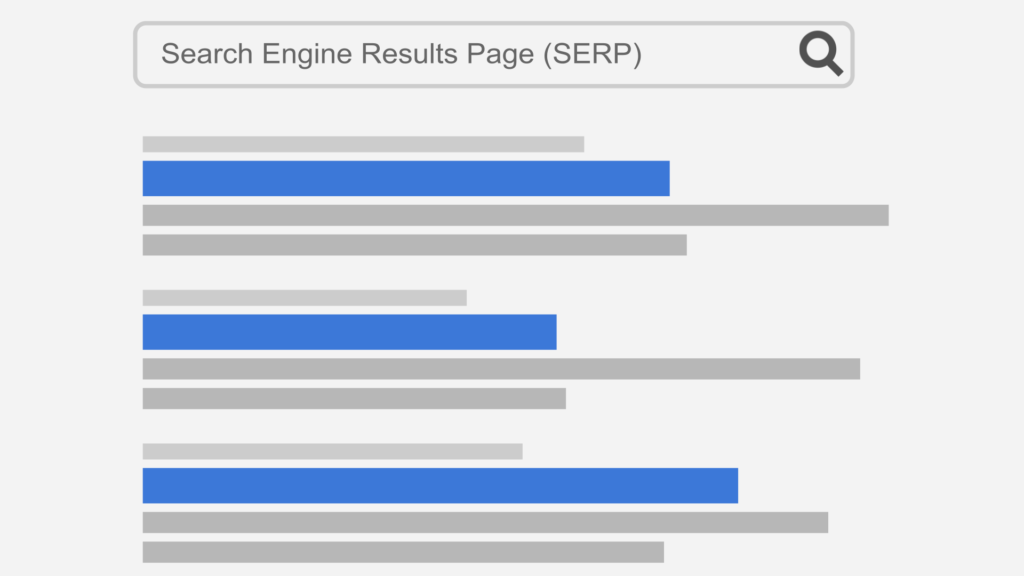
Perplexity is an AI-powered search and conversational tool that gives precise, context-rich answers to questions. Instead of a list of links, you get a written answer with numbered citations to the pages it read, plus follow-up questions to go deeper. It combines real-time web search, retrieval-augmented generation, and transparent citations, which is why researchers and fact-checkers trust it more than a chatbot that answers from memory.
The free plan gives unlimited standard searches and five Pro searches a day. Perplexity Pro costs $20 a month, or $200 a year, and adds unlimited Pro searches, a choice of models, and file upload. Pro subscribers can use models including GPT-5, Claude 4.0 Sonnet, Gemini 2.5 Pro, and Perplexity’s own Sonar model. There is also an Enterprise plan at $40 per user per month, and a Max plan at $200 a month that includes Perplexity’s Personal Computer agent for Windows, which can operate your desktop.
Perplexity’s Deep Research tool produces long research reports by searching the web widely and synthesising what it finds. It is powered by a version of DeepSeek’s R1 reasoning model, hosted by Perplexity on US and EU servers. That hosting choice matters: Perplexity says using DeepSeek R1 through its platform keeps user data on Western servers, which answers the main privacy worry about a Chinese-built model.
Perplexity has also moved beyond search. The Comet browser puts the assistant into browsing itself, and the company has added finance tools, shopping features, and brand monitoring. A Perplexity AI finance tool can track markets and summarise company results, while Perplexity AI brand monitoring tools watch for mentions of a company across the web. These are newer features, so check the current Pro and Enterprise pages before relying on them for a business workflow.
What Is DeepSeek?
DeepSeek is a Chinese AI company founded in 2023 and based in Hangzhou. Its founder and CEO, Liang Wenfeng, also co-founded the quantitative hedge fund High-Flyer, which funds DeepSeek. The company gained worldwide attention in January 2025 with the release of DeepSeek-R1, a reasoning model that matched leading models on many benchmarks while costing far less to train and run.
DeepSeek’s models are open-weight, which means developers can download them, run them on their own hardware, and build on them without paying a big vendor. The DeepSeek chat app is free to use, and the API is pay-per-use. Rates for the current V4-Flash model are about $0.14 per million input tokens and $0.28 per million output tokens, with cached input far cheaper. That pricing is why developers use DeepSeek for high-volume work: processing thousands of documents, running experiments, or building products where the model bill would otherwise hurt.
DeepSeek’s strength is reasoning depth. It handles multi-step problems, mathematics, and coding better than most models at its price, and it keeps context over long sessions, which makes it good for brainstorming, analytical writing, and long-form discussion. Its weakness is verification: DeepSeek answers from its training and reasoning, not from live web sources, so it can repeat errors or lack citation depth. It is also slower than Perplexity for quick questions, because it thinks longer before answering.
DeepSeek shipped V4-Flash in July 2026, with a large jump in agentic and coding ability at the same price. The improvement landed on the API first; the free web and app models were not updated at the same time. If you use DeepSeek, check which model version you are actually running, because the web app and the API do not always match.
Perplexity vs DeepSeek: Which Should You Choose?
The choice depends on the job, not on which tool is better in general. Use Perplexity when the answer must be current and checkable: research, fact-checking, market scanning, and anything you need to defend with sources. Use DeepSeek when the job is generation or reasoning at volume: writing code, transforming text, processing documents through an API, and running experiments where cost matters.
| Perplexity | DeepSeek | |
|---|---|---|
| Core job | Research and search with live data | Deep reasoning, coding, and math |
| Citations | Every answer links to its sources | Few or no citations; answers from the model |
| Current information | Yes, live web search | Limited; depends on the model version |
| Speed | Fast for quick answers | Slower; trades speed for depth |
| Cost | Free with limits; Pro $20/month | Free chat; API from about $0.14 per million input tokens |
| Best for | Researchers, fact-checkers, analysts | Developers, writers, analysts at volume |
| Weakness | Pro features sit behind a subscription | No live citations; data-residency questions for business use |
Many people use both: Perplexity to find and verify the facts, DeepSeek to analyse them, write the code, or draft the long document. Perplexity Pro even lets you run DeepSeek R1 inside Perplexity, which combines live search with DeepSeek reasoning in one place. That combination is the best of both for research-heavy work.
A note on trust: DeepSeek is a Chinese company, and some organisations restrict its use over data-residency concerns. The US Navy has banned its use, and debates about its data handling continue. Using DeepSeek R1 through Perplexity, hosted on US or EU servers, is one way teams handle that concern, but regulated organisations should check their own policies before adopting either tool.
Grok: Elon Musk’s AI Tool
Grok is the AI chatbot built by xAI, the AI company Elon Musk founded in 2023. Its signature feature is that it is wired into X, the social network Musk owns, and into the open web, so it can answer with real-time information from posts and the web. It launched in November 2023 and now runs on the Grok 4.5 model, which can generate text, images, and video.
Grok is available on the web at grok.com, inside the X app, and through mobile apps. There is a limited free version and paid subscriptions through X Premium and SuperGrok. Its strength is fresh information: for breaking news, live events, and what people are saying right now, Grok’s access to X gives it an edge over chatbots that rely on training data alone. Its weakness is the same integration: its behaviour has changed visibly with system-prompt changes, and it has had high-profile failures, including in July 2025. Treat its answers about fast-moving events as a starting point and check them against a second source.
xAI has changed shape several times. It absorbed X in March 2025, was acquired by SpaceX in February 2026, and began calling itself SpaceX Super Intelligence in October 2026, while the website stayed x.ai and the product stayed Grok. For most users, none of that changes the product: it is still the chatbot with live access to X.
Nvidia AI Tools
Nvidia is best known for the GPUs that train AI models, but it also ships AI tools for developers. The most useful ones are the NVIDIA NIM microservices: pre-built containers with optimised inference for more than 100 popular AI models, which cut deployment time from weeks to minutes. They run on NVIDIA’s CUDA platform, which covers hundreds of millions of GPUs across clouds, data centres, workstations, and PCs.
NeMo is Nvidia’s framework for building and fine-tuning models and agents, and the CUDA-X libraries provide building blocks for retrieval-augmented generation, guardrails, data processing, and high-performance computing. At GTC Taipei 2026, Nvidia also unveiled its Agent Toolkit, including the NemoClaw framework for building agentic orchestration layers and the Nemotron 3 Ultra model, a 550-billion-parameter model built for long-running autonomous agents.
Nvidia AI tools are for developers and teams that run AI themselves, not for casual users. If you are choosing a cloud AI service, Bedrock or Vertex AI will be simpler. If you are deploying models on your own GPUs, or building agents that need to run for hours, Nvidia’s stack is the one to learn.
Apple AI Tools
Apple Intelligence is Apple’s suite of AI features, built into iOS, macOS, iPadOS, watchOS, and visionOS. It launched on 28 October 2024 with Writing Tools, notification summaries, Clean Up in Photos, and natural language search in Photos. Since then Apple has added Genmoji, Image Playground, Image Wand, Visual Intelligence, and live translation.
Apple Intelligence is free with a software upgrade on supported devices, and it runs many tasks on-device using Apple’s chips, which is its privacy pitch: your data stays on your phone or Mac where possible. It needs an iPhone 15 Pro or later for most features, and an iPhone 17 Pro or later for the newest ones.
At WWDC26 in June 2026, Apple unveiled the next generation of Apple Intelligence and Siri AI, a rebuilt Siri that can answer questions about what is on your screen, draw on personal context across apps, and go to the web for up-to-date information. It arrives with iOS 27 and the other 2026 operating system releases. A separate tool, called “intelligent assistant”, arrived in the Creator Studio apps (Logic Pro, Pages, Numbers, and Keynote) to help creators work faster. It is not powered by Apple Intelligence or Siri AI, but by a different Apple system.
Apple’s AI tools are for people inside the Apple ecosystem. They are good at on-device writing help, photo editing, and summarising, but they are not a general-purpose chatbot or a research tool. If you need deep research or coding help, Perplexity, DeepSeek, or GitHub Copilot will serve you better.
GitHub AI Tools
GitHub Copilot is the AI coding assistant built by GitHub, a Microsoft subsidiary. It launched in 2021 as one of the first commercial AI pair-programming tools, starting with autocomplete powered by OpenAI Codex. By 2026 it had grown into a platform: inline completions, chat, multi-file agent mode, automated pull-request review, a terminal CLI, and a cloud coding agent that takes a GitHub issue, works on it in the background, and opens a pull request.
Copilot works inside VS Code, Visual Studio, JetBrains IDEs, Eclipse, Xcode, Neovim, and on GitHub.com. Agent mode lets it plan and execute multi-step coding tasks: picking files, running terminal commands, and iterating until the task is done. The cloud agent, generally available since September 2025, runs inside a sandboxed GitHub Actions environment, pushes commits to a draft pull request, runs tests, and asks for review when done. The Copilot CLI reached general availability in February 2026.
There are five tiers. The Free plan launched in December 2024 with 2,000 completions and 50 premium requests a month. Pro costs $10 a month, or $100 a year, with unlimited completions and 300 premium requests. Copilot reached 77 million registered users and 4.7 million paid subscribers by early 2026, about 42 percent of the paid AI coding tools market. It is multi-model: paid plans let you choose between models from OpenAI, Anthropic, and Google.
For developers, Copilot is the most practical AI tool in this guide, because it lives where the code already is. Its agent features trail specialist tools such as Cursor and Claude Code on complex tasks, but its GitHub integration is deeper than any competitor’s.


Free AI Tools Like Perplexity
If Perplexity Pro’s $20 a month is more than you want to pay, there are free options. Perplexity itself is free for unlimited standard searches, with five Pro searches a day. DeepSeek’s chat app is free, with no subscription at all. Google’s Gemini and Microsoft Copilot both offer free tiers with web search, though their citations are less complete than Perplexity’s. Brave Search and You.com also offer AI answers with sources on free plans.
The free tools share a limit: the best models, the deepest research, and the most searches sit behind a paywall. For occasional research, the free tiers are enough. For daily research work, a $20 Pro subscription usually pays for itself in time saved.
How to Choose Between These Tools
Start with the question you ask most. If it is “what is true, and where is the source?”, use Perplexity. If it is “solve this problem, write this code, or process these documents cheaply”, use DeepSeek. If it is “what is happening right now on X?”, use Grok. If it is “help me write and review code”, use GitHub Copilot. If it is “help me write, summarise, and edit on my iPhone or Mac”, use Apple Intelligence. If it is “deploy and run models on my own GPUs”, use Nvidia’s tools.
Then check the cost and the data rules. Perplexity Pro is a flat $20 a month. DeepSeek’s API bills per token, so a small test is nearly free and a large job is still cheap. Grok’s price depends on your X subscription. Copilot Pro is $10 a month. Apple Intelligence is free with the device. And before using DeepSeek or Grok for work data, check your organisation’s policy on where the data goes.

Video: DeepSeek and Perplexity Together
The video below is by Terry Brock, who walks through DeepSeek, its integration with Perplexity, the data-privacy questions, and a live demo of the two working together. It is from January 2025, so the prices and model names have moved on since then, but the core idea, using Perplexity for search and DeepSeek for reasoning, still holds.
Frequently Asked Questions
Is Perplexity better than DeepSeek?
Neither is better in general. Perplexity is better for research and fact-checking, because every answer cites live web sources. DeepSeek is better for deep reasoning, coding, and high-volume work, because it is cheaper and keeps context over long sessions.
Is DeepSeek free?
Yes, the DeepSeek chat app and website are free to use. The API is pay-per-use, from about $0.14 per million input tokens, which is far cheaper than most rivals.
Can I use DeepSeek inside Perplexity?
Yes. Perplexity Pro lets you choose DeepSeek R1 as the reasoning model for a search, and Perplexity’s Deep Research tool is powered by a version of R1 hosted on US and EU servers.
What is Grok, and who made it?
Grok is the AI chatbot built by xAI, the company Elon Musk founded in 2023. It is built into X and has real-time access to posts on X and the open web.
Is Apple Intelligence free?
Yes. Apple Intelligence is included free with a software upgrade on supported devices, starting with iPhone 15 Pro and later models.
How much does GitHub Copilot cost?
There is a free plan with 2,000 completions and 50 premium requests a month. Pro costs $10 a month or $100 a year, with unlimited completions and 300 premium requests.
What are the best free AI tools like Perplexity?
Perplexity’s own free tier, DeepSeek’s free chat app, and the free tiers of Gemini and Microsoft Copilot. For daily research work, Perplexity Pro at $20 a month is usually worth it.
Sources
12
- TechWiser, “You Can Now Use Deepseek R1 in Perplexity: Here’s How”, https://techwiser.com/you-can-now-use-deepseek-r1-in-perplexity-heres-how/
- Techpoint Africa, “Perplexity AI vs Deepseek (2026): key differences, features & use cases”, https://techpoint.africa/guide/perplexity-ai-vs-deepseek-review/
- Which AI Best, “DeepSeek vs Perplexity 2026: Updated Comparison”, https://whichaibest.com/blog/deepseek-vs-perplexity-2026-08-01
- AI Comparison, “Perplexity vs DeepSeek (2026): Search vs Reasoning AI”, https://aicomparison.ai/perplexity-vs-deepseek/
- Botnation AI, “Grok Chatbot: Elon Musk’s AI Connected to X (2026 Guide)”, https://botnation.ai/en/grok-chatbot/
- VentureBeat, “Elon Musk’s xAI will launch ‘Grok’ chatbot this week”, https://venturebeat.com/ai/elon-musks-xai-will-launch-grok-chatbot-this-week-heres-what-to-expect
- eWeek, “Apple Intelligence Cheat Sheet: A Complete Guide in 2026”, https://www.eweek.com/news/apple-intelligence-cheat-sheet-complete-guide/
- Apple, “Apple unveils next generation of Apple Intelligence, Siri AI, and more”, https://www.apple.com/newsroom/2026/06/apple-unveils-next-generation-of-apple-intelligence-siri-ai-and-more/
- The Code W, “What Is GitHub Copilot? Features, Plans and Limitations”, https://www.thecodew.com/2026/10/what-is-github-copilot.html
- DEV Community, “GitHub Copilot in 2026 is not what you think it is anymore”, https://dev.to/carlosjcastrog/github-copilot-in-2026-is-not-what-you-think-it-is-anymore-ij3
- NVIDIA Newsroom, “NVIDIA Launches Generative AI Microservices for Developers”, https://nvidianews.nvidia.com/news/generative-ai-microservices-for-developers
- SiliconANGLE, “Nvidia gives developers the tools to build secure, autonomous AI workers that scale”, https://siliconangle.com/2026/06/01/nvidia-gives-developers-tool-build-secure-autonomous-ai-workers-scale/
Every factual claim on this page was verified against a named source above.