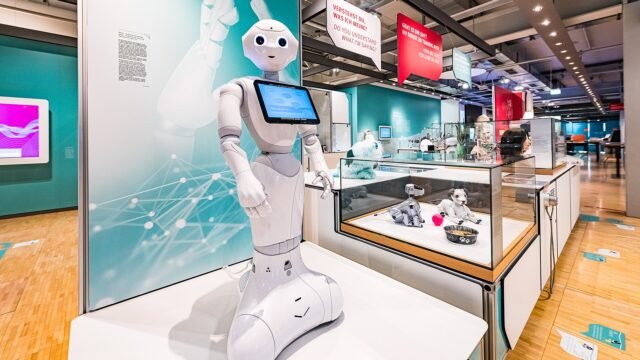
AI research news is the running record of new papers, experiments and announcements from university labs, corporate research teams and scientific journals. It covers the work that becomes tomorrow’s AI products, from new model architectures and training methods to AI systems that solve problems in biology, physics and mathematics. This page collects AI research breakthrough news today from labs and journals, and explains what the field covers and where to follow it. For the wider picture, see our AI news hub.
What AI Research News Covers
AI research news sits one step before product news. A product launch tells you what you can buy or use today; a research paper tells you what might be possible in a year or two, and why. AI advancements news usually falls into four groups.
First, model and methods papers: new architectures, training techniques and evaluation results, published on arXiv or presented at conferences such as NeurIPS. Second, AI for science: systems that fold proteins, simulate physics, design chips or help mathematicians prove theorems. Third, measurement research: benchmarks and evaluations that check what models can actually do, and where they fail. Fourth, research about research itself: studies of reproducibility, benchmark validity and the limits of AI-generated science.
Most of this work starts as a preprint, a paper posted publicly before peer review. That makes AI research news fast, but early claims can change. A result worth attention is one with a public paper or code, a named institution behind it, and independent checks.
The Biggest AI Research Stories of Late 2026
The AI breakthrough news from the last few weeks of 2026 has been unusually strong, and recent AI breakthroughs news keeps arriving. This AI research news 2026 roundup lists the developments that matter most, newest first.
A Claude-assisted proof of the Riemann hypothesis
On 20 November 2026, Levent Alpöge, a mathematician at Anthropic, posted a claim that he had proved the Riemann hypothesis working with Claude. The hypothesis, first posed in 1859, concerns the pattern behind the distribution of prime numbers. Alpöge released the proof as Lean code, a programming language that checks every step of a mathematical argument, in an archive of 175,187 files.
Within a day, independent mathematicians had confirmed the formal proof. Andrew Sutherland of MIT compiled the files separately, and on 21 November the Lean and Mathlib communities certified that both the statement and the proof are correct. Human mathematicians still have to work through the ideas and explain them; Alpöge says the method also resolves the Generalized Riemann Hypothesis. Nature Computational Science marked the moment with a 17 November editorial, “The rise of AI in mathematics, and science.”
The same day, Alpöge and Tristan Buckmaster of New York University posted a 79-page paper claiming a proof that the unforced 3D Navier-Stokes equations blow up in finite time, with a Lean formalization. That claim has had no independent check yet, and Terence Tao has said it needs work to become a professionally written paper. It aims to close a loophole in an earlier OpenAI result from September 2026, which relied on a forcing term.
AlphaFold 3 code goes open source
On 11 November 2026, Google DeepMind released the source code and model weights for AlphaFold 3 on GitHub. AlphaFold 3 predicts how proteins interact with DNA, RNA and other molecules, and the release lets academic researchers run it on their own hardware instead of waiting in a server queue. The code is under the Apache 2.0 licence, while the model weights are available for non-commercial use.
The release matters because the code was held back when AlphaFold 3 was first published in Nature in May 2024, a decision researchers criticised. DeepMind’s Hassabis and John Jumper shared the 2024 Nobel Prize in Chemistry for the AlphaFold work. In the same week, the MIT Jameel Clinic introduced Boltz-1, the first fully open-source model under the MIT licence, which its authors say matches AlphaFold 3 across biomolecular complexes.
MIT trains a small model to design analog chips
MIT News reported on 23 November 2026 that MIT researchers have built a training method called SLIC, short for Small LM Iterating on Circuits, that teaches a language model of around 4 billion parameters to design analog integrated circuits. Analog chips handle communication and power management, and designing them is slow, skilled work.
In the paper’s results, the SLIC model solved 87.1% of in-distribution design tasks within eight turns, beating a 763-billion-parameter DeepSeek model by 48.5 percentage points, and came close to GPT-6-Astra. Because the model is small enough to run locally, engineers can train it on confidential circuit data without sending it outside. The paper was submitted to arXiv on 10 November 2026 and will be presented at NeurIPS 2026. Graduate student Yan Xu led the work with senior author Ruonan Han; Analog Devices and IBM sponsored it.
AI time horizons keep doubling, but research judgment lags
On 20 November 2026, the evaluation group METR published its Time Horizon 2 (TH2) capability update. METR measures how long a task, measured in human working hours, a frontier AI system can complete with a 50% success rate. Across its combined suites, that time horizon is doubling roughly every 3.6 months, or about 110 days. On the verifiable part of the new TH2 suite, 36 tasks in 12 families, frontier models reach time horizons of up to 27 hours.
The same report found a clear gap: models do far worse where open-ended research judgment is needed, feedback is slow, or success is hard to check. METR concluded that current public evidence is insufficient to rule out drastic AI research and development acceleration in the next couple of years. The update covered 15 model checkpoints, from GPT-4o to GPT-6 Astra and Opus 5.5.
Stanford’s faster way to generate text
Stanford researchers introduced Next Concept Modeling (NCM), a method that generates text by predicting a coarse-to-fine stack of concepts in parallel, instead of one token at a time. In experimental benchmarks reported in the paper, NCM generated text up to 31 times faster than certain diffusion-based language models. The paper is on arXiv, and the Stanford Hazy Research group published an explainer alongside it.
The result needs care. The experiments used small models, and the speed comparison is against diffusion language models, not against commercial systems. Still, it shows that alternatives to token-by-token generation are viable, which matters for local and low-latency uses.

Coding agents finish under 8% of workplace tasks
A preprint submitted to arXiv on 15 November 2026 introduced SWE-CoWork, a benchmark placing coding agents inside a simulated software organisation with 26 colleagues. The two leading models passed about 63% of fail-to-pass tests, but fully completed fewer than 8% of 101 assignments. Giving agents full requirements up front raised partial test passes by about 16 points, but complete task success stayed unchanged.
A related preprint from Uniphore, introducing AppSci-Bench, found that 86 of 132 AI agent builds scored near perfect on tests their own builders wrote, then failed held-out cases. One banking agent that scored 1.0 on its own tests succeeded on only 5 of 97 held-out scenarios. Both papers point the same way: agent benchmarks need tests the builder did not write.
AI helps amateur astronomers find planet candidates
Nature reported on 20 November 2026 that amateur astronomers are using AI tools to search telescope data for undiscovered exoplanets, with mixed results. Pavel Rabtsevich, an AI specialist in Spain with no formal astronomy education, used Anthropic’s Claude Code to sift through data from more than 120,000 stars observed by NASA’s Transiting Exoplanet Survey Satellite (TESS). In about two weeks it found two possible planets orbiting a star 116 light years from Earth, TIC 4206066.
Professional astronomers have checked the signals and added them to their official list of planet candidates. Rabtsevich published his findings as a preprint on Zenodo on 25 September. Not every amateur result holds up, but this case shows what a careful amateur with good tools can do.
AI for Science: Biology, Physics and Medicine
AI for science news today is where the most useful breakthroughs now appear. The AlphaFold 3 release above is the biggest example, but it is not the only one.
In AI biology news, systems are moving from predicting structures to designing them. A 2026 paper from Shanghai Jiao Tong University introduced La-Ribo, a framework that designs RNA sequences and 3D structures together, trained on a quality-controlled dataset of 168,561 RNA structures. Nature’s AI pages also covered a York University study, published in Nature Machine Intelligence, which found that vision networks that predict primate brain activity well can still rely on internal features the brain does not use. The team released a testing toolkit so other researchers can check their own models.

Physics-informed AI news has grown just as fast. MIT researchers reported on 20 November 2026 a physics-constrained machine learning method that guarantees the predictions of chaotic-system models stay bounded, instead of drifting into impossible results. The paper, by Sunbochen Tang, Navid Azizan and Themistoklis Sapsis, appears in the Proceedings of the National Academy of Sciences, with open-source code.
In quantum research, the US Department of Energy announced on 9 October 2026 a $12 million award to a Harvard-led team for AI quantum error correction. The project is one of 12 Phase II Genesis Mission awards totalling $159 million, with partners including MIT, Cornell, three national laboratories, QuEra, NVIDIA and Anthropic.

Where to Follow AI Research News
No single source covers AI innovation news completely, so the habit that works is a short list checked regularly. These are the sources behind most of the stories on this page.
arXiv. The preprint server is where papers appear first, often months before peer review. Searching arXiv for a topic is the fastest way to see what researchers are actually doing. Treat every arXiv paper as unpublished until a journal or conference accepts it.
Nature and Science. Nature AI news appears on the journal’s artificial intelligence subject page, which lists new papers and news stories as they appear, alongside the peer-reviewed work that matters most. For AI research news today, Nature and Science are the first stop when a claim needs independent weight. MIT Technology Review AI news coverage sits between the journals and the tech press, and is useful for context on what a result means.
University newsrooms. MIT AI news, Stanford AI news and Harvard AI news all come from the universities’ own news offices, which publish plain-language accounts of new papers with named researchers and links to the source. They are also the best place to find the small, practical stories, such as MIT’s SLIC chip-design method, that the national press skips.
Lab blogs and evaluation groups. Google DeepMind, OpenAI and Anthropic publish research notes on their own blogs, and METR publishes capability updates that track what frontier models can do over time. Read lab blogs for the claim, then check the paper and the independent coverage before repeating it.
Conferences. NeurIPS 2026, the 40th Conference on Neural Information Processing Systems, runs 6 to 12 December 2026 in Sydney, Australia, with satellite meetings in Atlanta and Paris from 9 to 13 December. Many of the papers in this article, including MIT’s SLIC work, will be presented there.

How to Tell a Real Breakthrough from Hype
AI research moves fast, and the headlines move faster. Five checks separate a real result from noise.
Is there a paper or code you can read? A claim with a public arXiv paper, a GitHub repository or a Lean formalization can be checked. A claim with only a social media post cannot. The Riemann proof was released as 175,187 Lean files, which is why independent mathematicians could verify it within a day.
Has anyone independent checked it? Peer review takes months, so look for faster signals: another group reproducing the result, a named expert commenting on the record, or a formal check such as Lean compilation. The Navier-Stokes claim has a Lean formalization but no independent check yet, so it stays a claim, not a result.
Does the comparison match the headline? Stanford’s NCM was reported as 31 times faster, but the comparison was against diffusion language models, not commercial chatbots. MIT’s SLIC beat a 763-billion-parameter model on analog circuit design tasks, not on general ability. Always ask what was compared with what.
Are the tests independent of the builder? The AppSci-Bench finding is the warning here: agents that write their own tests look far better than they are. A benchmark only means something when the tests come from someone other than the team being measured.
Is it a preprint or a published paper? Preprints are normal in AI research, and most important results appear there first. But a preprint has not been peer reviewed, so note its status and watch for a journal version.
Related AI News Topics
AI research news connects to several neighbouring topics on this site, each with its own page.
Generative AI news. New generative models, image and video systems, and the research behind them. Read our generative AI news page for model releases and the papers that explain them.
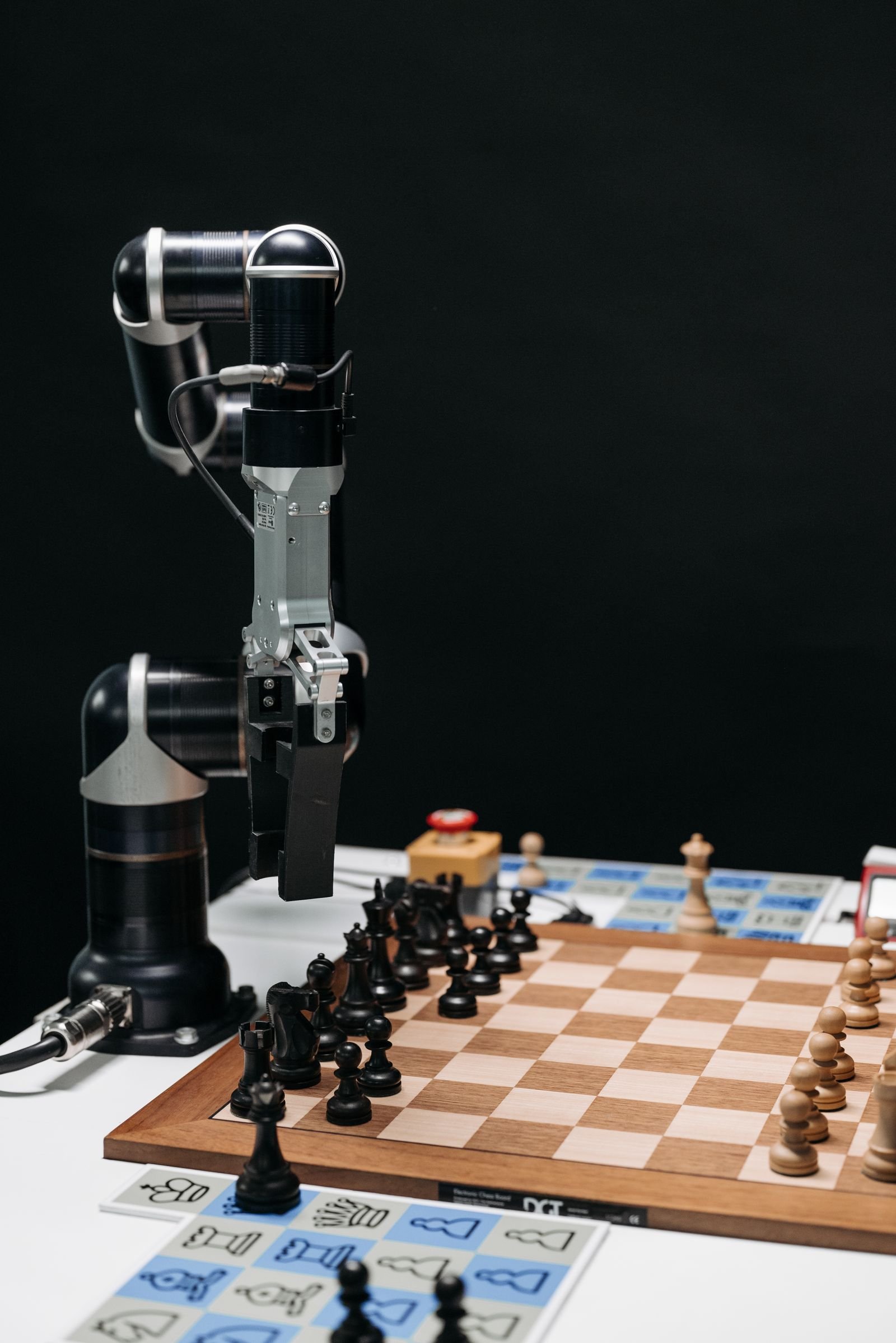
AI robotics news. Robots that learn from language, remember what they see and perform physical tasks. In multimodal AI research news, MIT’s UQ-DAAAM system, announced 5 November 2026, helps a robot correct mislabelled objects in its memory by comparing views from different angles. A Science Robotics paper from 11 November 2026 showed reinforcement learning policies driving a 5-tonne John Deere loader through acrobatic two-wheel manoeuvres. Read our AI robotics news page for more.
AI model news. New model releases, benchmark results and evaluation reports, including METR’s capability updates and the SWE-CoWork agent benchmark. Read our AI model news page for model-by-model coverage.
AI agents news. Agent systems, their capabilities and their failures, including the held-out test problem found by AppSci-Bench. Read our AI agents news page for agent coverage.
For company-level developments behind this research, see our AI company news page. For product updates and new tools built on this research, see our AI tools news page.
Frequently Asked Questions
What is AI research news?
AI research news covers new papers, experiments and announcements from university labs, corporate research teams and scientific journals: the work that becomes tomorrow’s AI products, from new model architectures to AI systems used in biology, physics and mathematics.
Where can I find the latest AI research news?
Start with arXiv for new preprints, Nature’s artificial intelligence subject page for peer-reviewed work and news, and the MIT News, Stanford and Harvard newsrooms for plain-language accounts of new papers.
Where do I find AI research news today from Nature and Science?
Nature’s artificial intelligence subject page lists new papers and news stories as they appear, and Science covers major results in its news section. Both are peer-reviewed publishers, so a result they report has passed editorial review or is clearly labelled as a preprint.
What was the biggest AI research breakthrough of 2026?
The most significant claim of November 2026 is the Claude-assisted proof of the Riemann hypothesis, posted on 20 November and certified correct in its Lean formalization on 21 November. The AlphaFold 3 open-source release on 11 November is the most useful, because researchers can now run it themselves.
Is AI research news the same as AI product news?
No. Product news covers launches, pricing and features you can use today. Research news covers papers and experiments, which often take months or years to reach products.
How do I know if an AI research claim is real?
Look for a public paper or code, an independent check by another group or a named expert, and a comparison that matches the headline. Preprints are normal, but note that a preprint has not been peer reviewed.
What is NeurIPS 2026, and when is it?
NeurIPS is the Conference on Neural Information Processing Systems, the largest annual machine learning conference. NeurIPS 2026 runs 6 to 12 December 2026 in Sydney, Australia, with satellites in Atlanta and Paris from 9 to 13 December.
What is AI for science?
AI for science means using AI systems as instruments inside other sciences: predicting protein structures, simulating physics, designing chips, finding planets in telescope data and helping mathematicians prove theorems.
Watch: AI Research News, Explained on Video
Stanford’s New AI Breakthrough: What If AI Could Write 30× Faster? NCM – Next Concept Modeling, Silicon Valley ChitChat
An explainer of Stanford’s Next Concept Modeling paper and what the reported 31× speed figure actually compares against. Checked live on 23 Nov 2026.
AI Just Learned to Design RNA From Scratch (La-Ribo Explained)
A paper explainer covering the La-Ribo framework for RNA sequence-structure co-design and its honest limitations, including long RNAs and mostly predicted training data. Checked live on 23 Nov 2026.
Sources
16
- Scientific American, “Anthropic mathematician proves Riemann hypothesis, most famous problem in all of math” (20 Nov 2026): https://www.scientificamerican.com/article/anthropic-mathematician-claims-to-prove-riemann-hypothesis-most-famous-problem-in-all-of-math/
- Scientific American, “The AI Riemann hypothesis proof is true, independent mathematicians confirm” (21 Nov 2026): https://www.scientificamerican.com/article/the-ai-riemann-hypothesis-proof-is-almost-certainly-true-independent-mathematicians-attest/
- GitHub, google-deepmind/alphafold3: https://github.com/google-deepmind/alphafold3
- Science, “Google DeepMind releases code behind its most advanced protein prediction program”: https://www.science.org/content/article/google-deepmind-releases-code-behind-its-most-advanced-protein-prediction-program
- OpenBio News, “AI in Bio Weekly Review: November 7–13, 2026”: https://openbionews.com/analysis/ai-in-bio-weekly-review-2026-11-07-to-13/
- MIT News, “AI-driven technique could help engineers design analog chips faster and with less expense” (23 Nov 2026): https://news.mit.edu/2026/ai-driven-technique-could-help-engineers-design-analog-chips-faster-and-less-expensive-1123
- arXiv, “SLIC: Reinforcement Fine-Tuning Small LMs for Multi-Turn Analog Circuit Optimization”: https://arxiv.org/abs/2611.13452
- METR, “Q4 2026 Capability Update: Time Horizon and Lifecycle Cost” (20 Nov 2026): https://metr.org/blog/2026-11-20-q4-2026-capability-update/
- arXiv, “Next-Concept Modeling”: https://arxiv.org/abs/2610.14162
- Nature, “Claude, find me a planet: amateur astronomers are using AI with mixed results” (20 Nov 2026): https://www.nature.com/articles/d41586-026-03790-w
- Nature, “Artificial Intelligence: Latest research and news”: https://www.nature.com/subjects/artificial-intelligence
- Nature Computational Science, Volume 6, Issue 11 (November 2026): https://www.nature.com/natcomputsci/volumes/6/issues/11
- NeurIPS, “2026 Dates and Deadlines”: https://neurips.cc/Conferences/2026/Dates
- MIT News, Research topic page: https://news.mit.edu/topic/research?type=2
- TechXplore, “Chimney or squirrel? Clearing up a robot’s fuzzy memory by comparing images from different angles” (5 Nov 2026): https://techxplore.com/news/2026-11-chimney-squirrel-robot-fuzzy-memory.html
- Let’s Data Science, “AI Research News: Papers, Labs & Breakthroughs”: https://letsdatascience.com/news/topic/ai-research
Every factual claim on this page was verified against a named source above.