


AI technology news is the running record of how artificial intelligence changes: new models, faster chips, new rules, and the business deals that fund it all. This page is the hub for that coverage, with the big themes explained, the biggest stories of 2026 so far, and the places worth following.
This hub sits inside our AI news hub. The page below stays at the technology level: what was built, what it runs on, what it costs, and what the rules now say.
What Counts as AI Technology News
Not every story with “AI” in the headline is technology news. AI technology news is the overlap: stories about the technology itself and what it does in the world.
Most of it falls into five beats.
New models. A lab releases a model, updates one, or opens one up for others to build on. Model releases are the most covered beat, because a new model changes what every app built on it can do.
Chips and hardware. The processors, memory, and data centres that train and run models. Chip news covers new architectures, supply, export controls, and the energy bill for running it all.
Rules and safety. Laws, court cases, and safety work that decide what AI systems may do and who answers when they go wrong.
Business and adoption. Who is buying, who is building, and whether companies are getting value from the systems they have already paid for.
Tools and products. AI features landing in software people already use, from search and office apps to coding tools and phones.
The latest AI technology news on any given day is usually one story from each beat. A slow day has a model update and a chip announcement. A big day has all five at once. A reader looking for technology AI news today will find the same five beats on every good news page, in a different order each day.
The Biggest AI Technology News Stories of 2026
AI news moves fast, so this section is a snapshot of the AI technology news of 2026, checked on 23 November 2026. The stories below are the latest technology news on AI this year, and the ones that shaped it. For what happened this week, see our weekly roundup at the end of this page.
OpenAI released GPT-5.1 on 12 November 2026. The update came as two models in ChatGPT: GPT-5.1 Instant for everyday questions and GPT-5.1 Thinking for harder reasoning work. The headline change was adaptive reasoning, where the model spends less time on simple tasks and more on hard ones. Paid ChatGPT users got it first, with free users following over the next few days.
Anthropic went public on 19 November 2026 in the largest IPO ever. The maker of the Claude chatbot priced its shares at $83, raising $81.3 billion in the public offering, with a further $26 billion private placement taking the total raised to about $107.3 billion. The shares opened about 34 percent above the offer price on the Nasdaq, under the ticker ANT. It was the first frontier AI lab to list on a stock market.
Nvidia unveiled the Rubin platform at CES on 5 January 2026. Rubin is a six-chip AI platform, built around Rubin GPUs, Vera CPUs, and new networking, and the successor to the Blackwell architecture. Nvidia said at the show that Rubin was already in full production, with partner systems arriving in the second half of 2026.
The EU AI Act moved into enforcement on 2 August 2026. From that date, the European Commission’s AI Office and national authorities began enforcing the Act, and new transparency rules started to apply: chatbots must say they are AI, deepfakes must be labelled, and AI-generated content must carry machine-readable marks. Obligations for high-risk AI systems were pushed back to 2 December 2027 by the Digital Omnibus, a 2026 amendment to the Act.
OpenAI’s chief scientist called for industry limits on AI development. In a post published on 22 November 2026, Jakub Pachocki proposed that AI companies agree on shared development limits until safety and monitoring systems improve. He pointed to OpenAI’s own measurements: log-perplexity, a measure of how well a model predicts what comes next, fell from about 0.99 for GPT-3.5 to about 0.91 for GPT-4 and below 0.8 for current models, with new capabilities appearing as the number falls.

New Models and the Research Behind Them
A model release is the starting gun, not the finish line. After the announcement comes the part that matters to readers: what the model does better, what it costs to run, and whether independent checks back up the lab’s claims.
In 2026 the pattern has been steady, smaller steps rather than one big leap. GPT-5.1 refined the GPT-5 series instead of replacing it. Labs are also shipping more specialised models: security models, coding models, and models built for agents that plan and carry out multi-step tasks. News about emerging AI technologies also covers robots that learn from video and tools built for specific jobs such as security or coding. Open-weight models, where the weights are published for others to use and adapt, remain a second front, with Chinese labs prominent among the releases.
Research news sits underneath the releases. Papers on training methods, safety evaluations, and agent behaviour explain why the next model will work differently, months before it arrives.
Two habits help here. First, treat a lab’s own benchmark numbers as a claim, not a result, until an independent evaluation repeats them. Second, watch what a model costs to run, not just what it scores. A model that is slightly weaker but far cheaper often matters more in practice.
AI Chips and the Hardware Race
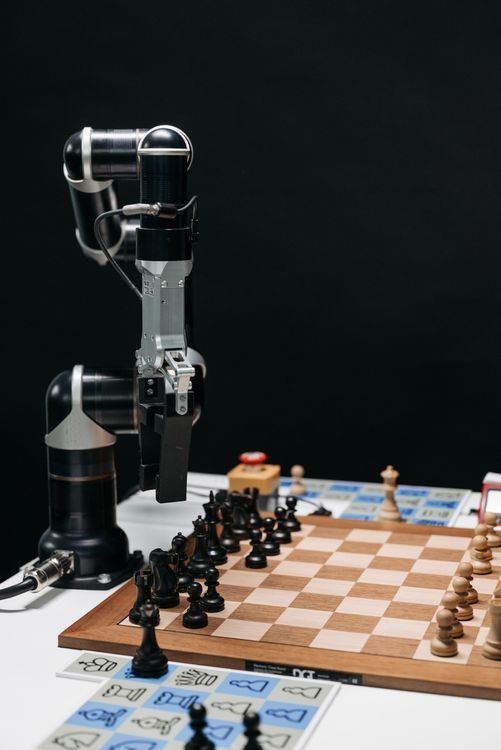
Every model story is also a chip story. Training a frontier model takes thousands of accelerators running for weeks, and answering user questions takes data centres full of them running all day. That is why chip announcements now lead the technology news as often as model releases do.
Nvidia’s Rubin platform, unveiled at CES in January 2026, is the current centre of that race. It is a full rack-scale system rather than a single chip, combining GPUs, CPUs, networking, and storage that were designed together. AMD and Google’s custom silicon programmes are the main challengers, and OpenAI has moved into designing its own inference chip as well: its first custom-built inference processor, Jalapeño, unveiled with Broadcom in June 2026.
Three forces shape chip news beyond the hardware itself. Export controls decide who can buy the fastest chips, and the rules changed again in November 2026, when the United States extended restrictions on advanced chips and remote access to computing. Energy is the second: data centre power demand is growing far faster than grid capacity in some regions, and operators are arranging their own power. The third is money: the cost of the build-out is now large enough to move stock markets, and the Anthropic IPO showed investors are willing to fund the labs directly, not just the chipmakers.
AI Regulation and Safety
Regulation was the beat that changed most in 2026. For years AI rules were drafts and proposals. This year they started to bite.
The EU AI Act is the clearest example. Its transparency rules and enforcement powers took effect on 2 August 2026, while the obligations for high-risk systems were delayed to December 2027. The delay was a deliberate choice, not an accident: lawmakers wanted more time to get the compliance rules right for systems used in hiring, education, and law enforcement.
In the United States the action has been split. There is no single federal AI law, so the news comes from agencies, states, and courts. California sued OpenAI in November 2026, with the state’s attorney general arguing the company misled the public about AI safety. The Federal Trade Commission has also opened investigations into AI companies over consumer risks from advanced agents.
Safety work runs alongside the law. Labs now publish safety evaluations and invite outside researchers to test their models before release. OpenAI’s chief scientist went further in November 2026, arguing the industry should agree on development limits, a proposal that puts the question of who sets the pace of AI progress into the open.
The honest position is that nobody knows yet which approach works. Europe has the most complete law, the United States has the most courtroom action, and the labs themselves are writing much of the safety practice.

AI in Business: Adoption, Money, and Jobs
The business story of AI in 2026 is a gap between spending and returns. Companies are buying AI systems, building data centres, and hiring for AI roles at a pace never seen before. Whether the returns match the spending is the open question, and it is now the main subject of business coverage.
The Anthropic IPO is the clearest signal of how big the money has become. A single AI lab raised more in one listing than any company in history, and its filings showed revenue of $16.2 billion in the first half of 2026 alone. Investors are no longer funding only the chipmakers and cloud providers. They are funding the labs that sell intelligence directly.
Adoption news is more mixed. Consultancies report that agents are starting to sell where older software pitches could not, because a working agent is easier to justify than a system upgrade. Many companies are still working out where AI fits: customer service and coding are the most common first uses.
Jobs coverage follows the same split. Some roles are being reshaped by AI tools, others are being created around them, and the net effect is still argued over. The coverage now reaches every sector, and niche searches show how far it goes, from assistive technology AI news to beauty tech AI news. Readers following this beat should watch two numbers: what companies spend on AI infrastructure, and what they say about revenue from AI products. When the second starts to catch the first, the story changes.

Where to Follow AI Technology News
No single outlet covers all five beats well. The practical approach is a small set of sources, each checked for a different reason.
Bloomberg Technology is the broadcast home of much of the Bloomberg technology AI news readers look for. It is Bloomberg’s daily technology programme, hosted by Ed Ludlow, and its November 2026 coverage centred on the Anthropic IPO and the upheaval at Nvidia. It is strongest on markets, deals, and executive interviews.
The Register’s AI and ML section is the best single page for the technical side: chips, open-weight models, security incidents, and enterprise deployments, usually with a sceptical eye. Its November 2026 front page ran stories on AI agents finding security flaws on their own, export controls, and the energy cost of data centres.
General news AI topic pages, such as Business Standard’s artificial intelligence and robotics page, are useful for the day’s headlines in one place, including stories from India and Asia that Western outlets cover late.
Vendor newsrooms are primary sources, not neutral ones. OpenAI, Nvidia, Google, and Anthropic announce their own releases first, and their posts are the only place to get the exact details. Read them for facts, and read independent coverage for whether the claims hold up.
Our own guide to the best AI news sites and newsletters lists the outlets above and more, with what each one is good for. Company-by-company coverage lives on our AI company news page, and product and tool announcements on our AI tools news page.
A workable routine is ten minutes a day on one news page, plus a weekly roundup for the stories you missed. Readers who search for AI tech news today usually want the same thing: the newest stories first, with dates attached. Daily reading keeps you current. Weekly reading keeps you honest about which stories mattered.
How to Tell Real AI News from Hype
AI coverage attracts hype because the claims are large and the evidence is often thin. Four checks catch most of it.
Find the primary source. If a story says a model “beats” a rival, look for the evaluation behind the claim. A lab blog post, a paper, or a benchmark page counts. A second-hand summary does not.
Ask who measured it. Vendor numbers are the starting point, not the verdict. Independent evaluations, outside safety testers, and user reports are what turn a claim into a fact. Be wary of any performance claim with no named test behind it.
Watch for the missing number. A story that quotes a capability but not a cost, a speed but not a test setup, or a user count but not a date is leaving out the part that would let you judge it.
Breaking AI technology news deserves the most care. Wait a day on the biggest claims. The first version of a dramatic story is often wrong in the details. The corrected version, usually published within a day, is the one worth remembering.
The US National Institute of Standards and Technology’s AI Risk Management Framework is a useful reference: it sets out how organisations should think about AI risks, under four functions called govern, map, measure, and manage. It is voluntary, built with more than 240 organisations, and the closest thing the field has to a shared checklist for trustworthy AI.
This Week in AI Technology News
The stories above are the shape of 2026. The week-to-week detail changes constantly, and a hub page cannot carry it without going stale. That is what our weekly roundup is for.
Our AI news this week page collects the week’s model releases, chip news, regulation, and business stories in one place, with the dates attached so you can see what is new and what is already a week old.
Watch: AI Technology News, Explained
1. “Latest AI News | 6th Nov 2026 (EST) | AI News: Anthropic IPO Doubts, Airbnb AI Agent, Meta Muse and” – AI News Today
A daily roundup in plain English: the Anthropic IPO, an Airbnb AI travel agent, new developer tools from Amazon and Microsoft, and Nvidia’s Vera CPU, plus the market moves behind them.
2. “What Is Artificial Intelligence? | Artificial Intelligence Explained” – IBM Technology
A short explainer on what artificial intelligence is and where it already shows up in everyday life, from the vendor-neutral side of IBM’s channel.
Frequently Asked Questions
What is AI technology news?
It is news about the technology of artificial intelligence itself: new models, chips and hardware, rules and safety work, business adoption, and AI tools and products. It is different from AI research news, which covers papers and findings, and from AI business news, which covers deals and money.
Where can I read the latest AI technology news today?
Start with one daily source and one weekly roundup. Bloomberg Technology covers markets and deals, The Register’s AI and ML section covers chips and security, and our AI news this week page collects the week’s stories with dates. Our guide to the best AI news sites and newsletters lists more options.
What is the biggest AI story of 2026 so far?
The largest single story is Anthropic’s IPO on 19 November 2026, the biggest public listing ever, which raised about $107.3 billion including a private placement. The year’s other defining stories are OpenAI’s GPT-5.1 release, Nvidia’s Rubin platform, and the EU AI Act moving into enforcement.
What is Bloomberg Technology AI news?
It is the AI coverage of Bloomberg Technology, Bloomberg’s daily technology programme hosted by Ed Ludlow. It focuses on the business side of AI: IPOs, earnings, chip supply, and interviews with executives. In November 2026 its leading stories were the Anthropic IPO and the leadership upheaval at Nvidia.
How often does AI technology news change?
Daily. Model updates, chip announcements, and regulation move every week, and sometimes every day. The latest AI tech news is a moving target, so a hub page like this one explains the themes; the daily detail lives in news pages and in our weekly roundup.
Is AI technology news the same as AI research news?
No. Research news covers papers, experiments, and findings, often months before they become products. Technology news covers what was released, what it runs on, what it costs, and what the rules say.
How do I know if an AI news story is true?
Check the primary source, ask who measured any numbers in the story, and see whether a second independent outlet confirms it. Vendor announcements are facts about what a company says, not proof that the claims are right. Waiting a day for corrections helps on the biggest stories.
What AI technology news should businesses follow?
Follow three things: model releases that change what your tools can do, regulation that changes what you may do with them, and chip and infrastructure news that changes what it all costs.
The Bottom Line
AI technology news is five beats moving at once: models, chips, rules, business, and tools. The stories of 2026 so far are a model update, a record IPO, a new chip platform, a law coming into force, and a call for limits. Follow one daily source, read the primary announcement before the commentary, and check the weekly roundup to see which stories lasted. See our AI news hub for the full map.
Sources
14
- OpenAI – “Introducing GPT-5.1 for developers” – https://openai.com/index/gpt-5-1-for-developers/
- CNN – “Anthropic’s Wall Street debut marks a new chapter for AI” (18 Nov 2026) – https://www.cnn.com/2026/11/18/investing/anthropic-ipo-wall-street-ai
- MoneyControl – “Anthropic IPO raises $107.3 billion to top SpaceX’s record debut” (19 Nov 2026) – https://www.moneycontrol.com/news/business/ipo/anthropic-ipo-raises-107-3-billion-to-top-spacex-s-record-debut-14084039.html
- NVIDIA Blog – “NVIDIA Rubin Platform, Open Models, Autonomous Driving: NVIDIA Presents Blueprint for the Future at CES” (5 Jan 2026) – https://blogs.nvidia.com/blog/2026-ces-special-presentation/
- European Commission – “Commission starts enforcing AI Act rules and new transparency requirements on 2 August” – https://ec.europa.eu/commission/presscorner/detail/en/ip_26_1714
- Whistic – “EU AI Act Compliance: Deadlines, Roles, and Third-Party AI” – https://www.whistic.com/resources/frameworks/frameworks-eu-ai-act
- Gadgets Now – “OpenAI Says AI Could Develop Skills Nobody Explicitly Taught It, Here’s Why” (23 Nov 2026) – https://gadgetsnow.indiatimes.com/tech-news/openai-says-ai-could-develop-skills-nobody-explicitly-taught-it-heres-why/articleshow/136087325.cms
- The Register – “AI and ML news” – https://www.theregister.com/ai_ml/
- Business Standard – “Artificial intelligence and robotics: Latest News Headlines” – https://www.business-standard.com/amp/topic/artificial-intelligence-and-robotics
- Tapesearch – “Bloomberg Tech transcripts” (Bloomberg Technology, hosted by Ed Ludlow) – https://www.tapesearch.com/podcast/bloomberg-technology/1611767434
- FXStreet – “Stocks rally in anticipation of $107 billion Anthropic IPO” (19 Nov 2026, Anthropic revenue from company filings) – https://www.fxstreet.com/news/stocks-rally-in-anticipation-of-107-billion-anthropic-ipo-202611191414
- Let’s Data Science – “AI Chips News: GPUs, Semiconductors & Memory” – https://letsdatascience.com/news/topic/ai-chips
- Kiran Prasad – “Custom Silicon Heats Up, Global AI Regulation Solidifies, and Open Source LLMs Push Frontiers” (June 2026) – https://kiranic.com/ai-slop/2026/06/custom-silicon-heats-up-global-ai-regulation-solidifies-and-open-source-llms-pus/
- U.S. National Institute of Standards and Technology (NIST) – “AI Risk Management Framework” – https://www.nist.gov/itl/ai-risk-management-framework
Checked 23 Nov 2026. Every factual claim on this page was verified against a named source above.